
17 Best GRC Software Solutions by Category

.avif)
GRC software sits at the center of how organizations manage governance, compliance, and risk. It brings structure to processes that would otherwise be scattered across spreadsheets, emails, and disconnected tools, centralizing policies, controls, audits, and vendor records into a single system of record. For teams dealing with frequent audits and shifting regulatory requirements, that level of organization is critical.
But the context around GRC has changed. According to Verizon’s 2025 DBIR, 30% of breaches now involve a third party (double the previous year), driven by increased exploitation of vulnerabilities and operational dependencies. Risk is no longer confined to internal controls or periodic reviews. It is distributed across vendors, integrations, and external systems, which shifts what teams need from these platforms.
Understanding these differences and where each platform falls short will help you manage risk consistently and effectively across your organization.
What Are GRC Software Solutions, and How Do They Work?
GRC software solutions are solutions that help organizations manage governance, risk, and compliance activities more systematically. In practical terms, that usually means centralizing policies, controls, assessments, audit evidence, issues, remediation workflows, and reporting so teams don't have to coordinate everything through spreadsheets or disconnected systems.
It’s important to note that GRC software is now an umbrella term covering very different products. Traditional enterprise GRC platforms served as centralized systems of record. Over time, cloud adoption, expanding regulatory requirements, and vendor sprawl pushed the market into more specialized categories, from compliance automation to external security ratings. Each category addresses a different operational need.
Most GRC tools are strong at documenting workflows, helping teams record controls, assign owners, track assessments, and show evidence during audits. That has real value, but the problem is that documenting a risk process is not the same as validating whether risk exists.
Many platforms can tell you whether a vendor completed a questionnaire, submitted a report, or passed a workflow checkpoint, much like a checkbox exercise. Fewer can tell you whether the vendor actually delivers meaningful exposure in your environment; hence, the importance of truly understanding your GRC tool’s capabilities before purchasing it.
.avif)
Benefits of GRC Software Solutions
GRC platforms help organizations bring structure, visibility, and consistency to governance, risk, and compliance operations. While capabilities vary by category, the most valuable benefits typically include:
- Centralized governance and risk visibility: Consolidate policies, controls, audits, vendor records, remediation tasks, and risk assessments into a single system, reducing fragmented workflows and improving organizational oversight.
- Improved audit readiness and compliance operations: Automate evidence collection, control tracking, policy management, and reporting workflows to reduce manual audit preparation and maintain ongoing compliance visibility.
- More scalable risk management processes: Standardize assessments, approvals, remediation workflows, and ownership tracking across teams, helping organizations manage growing operational, cyber, and third-party risk programs more efficiently.
- Stronger cross-functional coordination: Align security, compliance, procurement, legal, audit, and IT teams within shared workflows and reporting structures, reducing duplicated effort and operational silos.
- Continuous monitoring and remediation tracking: Monitor control changes, external risk signals, remediation tasks, and vendor activity over time so teams can identify issues earlier and maintain ongoing visibility into evolving risk.
These benefits are operational, but important. They help organizations scale governance and risk programs more effectively, reduce manual coordination, and improve decision-making across increasingly complex business environments. At the same time, not all platforms validate risk equally deeply. Many improve process management and visibility more than they improve contextual understanding of actual organizational exposure.
17 Best GRC Software Solutions by Category
How we rated these tools
We selected these tools based on how well they address the different operational layers of modern governance, risk, and compliance programs. That includes factors such as governance and audit capabilities, workflow flexibility, compliance automation, third-party risk visibility, scalability, reporting, and overall usability.
Because the GRC market now spans several distinct categories, we also evaluated how effectively each platform supports its intended use case, whether that is enterprise governance management, compliance operations, third-party cyber risk management, external security monitoring, or cyber risk quantification.
For cyber-focused platforms specifically, we considered the depth of exposure analysis, continuous monitoring capabilities, contextual risk visibility, and the platform's effectiveness in translating findings into actionable remediation.
Enterprise GRC Platforms
Enterprise GRC platforms serve as centralized systems of record for governance, compliance, audit, operational risk, and third-party oversight. These platforms are typically deployed by large regulated organizations that require standardized governance processes across multiple business units and regulatory domains. Look for:
- Enterprise-wide policy and controls management
- Audit and regulatory workflow orchestration
- Cross-functional risk aggregation
- Workflow automation and reporting
- Scalability across complex organizations
1. Archer
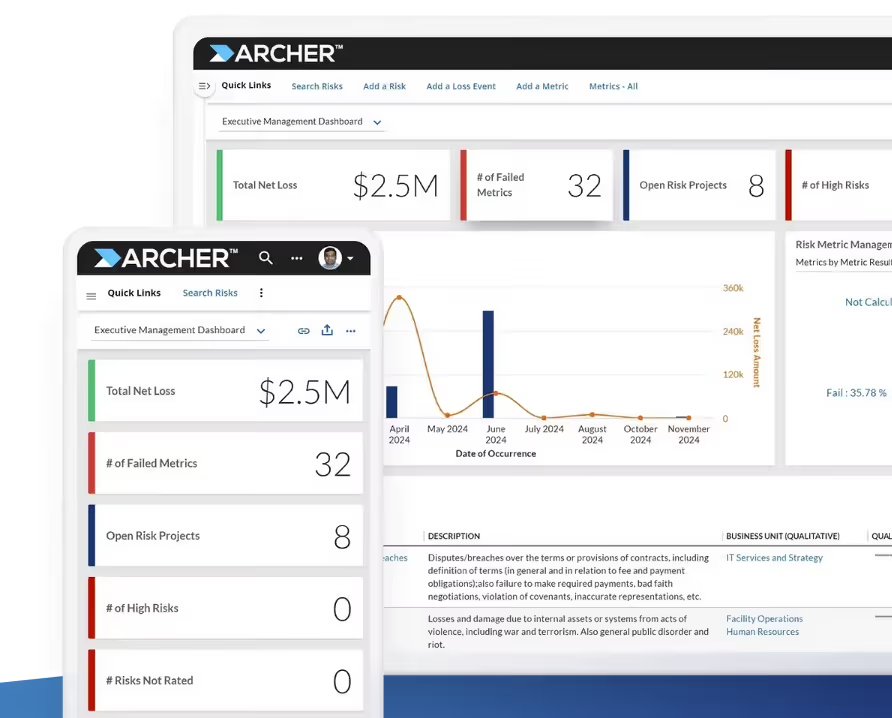
Archer is one of the most established enterprise GRC platforms in the market. It provides large organizations with centralized governance workflows covering operational risk, audit management, compliance, policy management, and third-party risk.
Its primary strength is flexibility at enterprise scale. Organizations can build highly customized governance models and reporting structures across multiple risk domains. Archer is especially common within heavily regulated sectors such as financial services, healthcare, and government. The tradeoff is complexity. Archer deployments often require significant implementation effort, dedicated administration, and ongoing customization work to maintain workflows and reporting structures.
Best for: Large regulated enterprises that need a centralized governance and compliance operating model.
When to avoid it: Avoid it if your priority is fast deployment or security-led third-party exposure analysis.
Score: 8.2/10
2. ServiceNow GRC
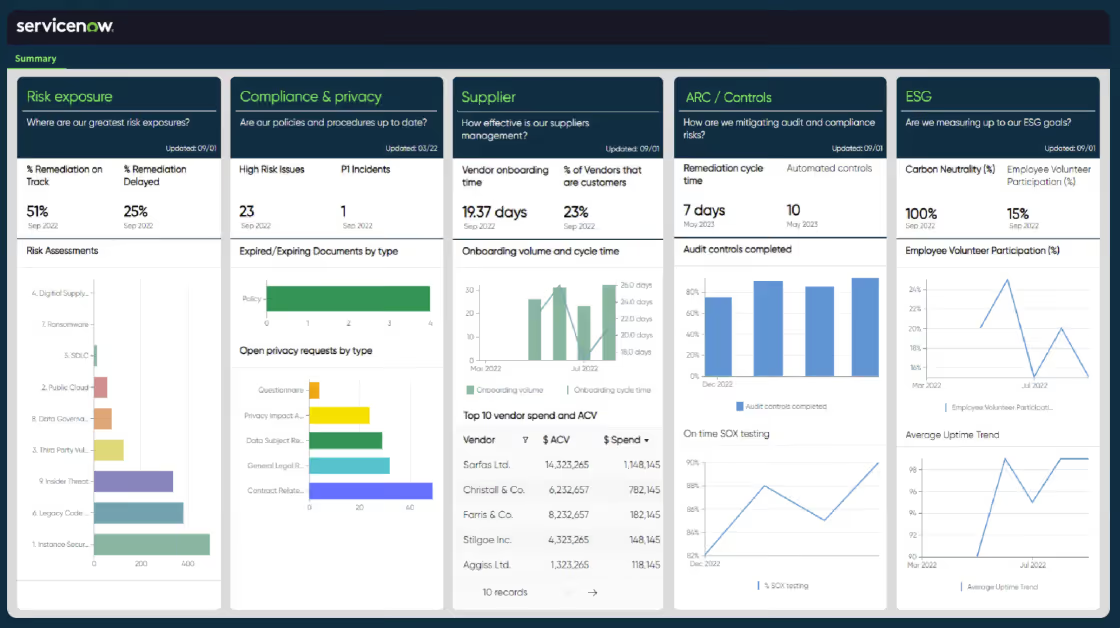
ServiceNow GRC extends governance and risk management directly into enterprise operational workflows. Because it sits within the broader ServiceNow ecosystem, organizations can connect governance activities to IT operations, asset management, ticketing, and security workflows.
This operational integration is its biggest advantage. Teams can automate issue tracking, remediation coordination, policy exceptions, and workflow escalation across the organization from a single operational platform. However, ServiceNow GRC implementations can become operationally heavy, particularly for organizations without existing ServiceNow maturity.
Best for: Enterprises already standardized on ServiceNow that want integrated governance and operational risk workflows.
When to avoid it: Avoid it if you need lightweight deployment or specialized vendor exposure validation.
Score: 8.3/10
3. MetricStream
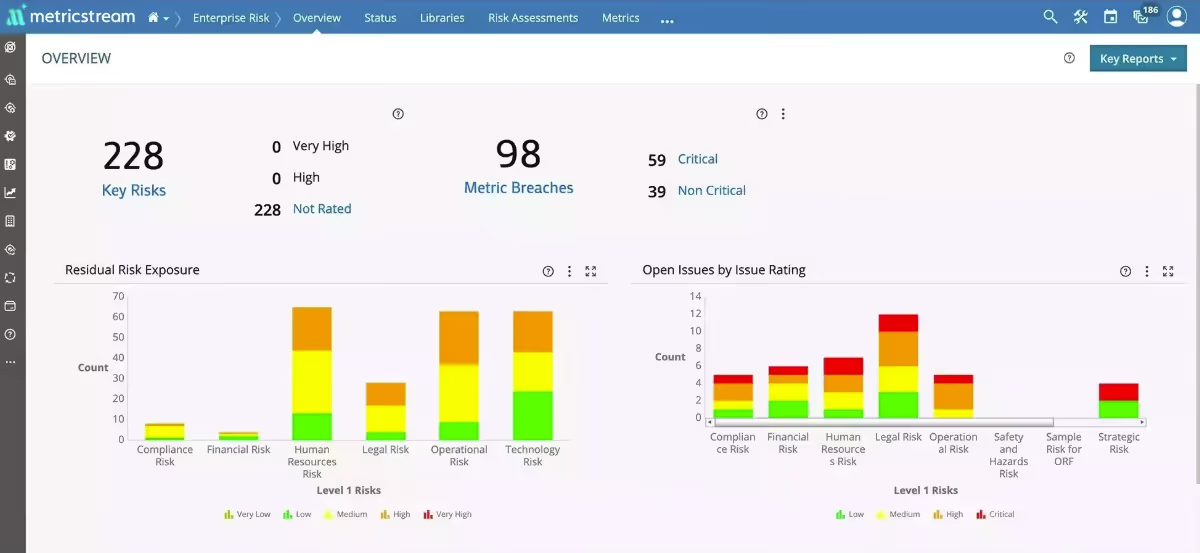
MetricStream focuses on integrated risk management across enterprise governance functions, including compliance, audit, cyber risk, operational resilience, and third-party risk.
The platform is designed for organizations managing highly complex regulatory environments and cross-functional governance structures. Its strength lies in aggregating multiple governance domains into a unified operating model. That depth comes with substantial deployment complexity and longer implementation timelines than those of modern cloud-native platforms.
Best for: Highly regulated enterprises managing multiple interconnected risk programs.
When to avoid it: Avoid it if your organization prioritizes speed, simplicity, or focused cyber risk analysis.
Score: 8.1/10
4. IBM OpenPages
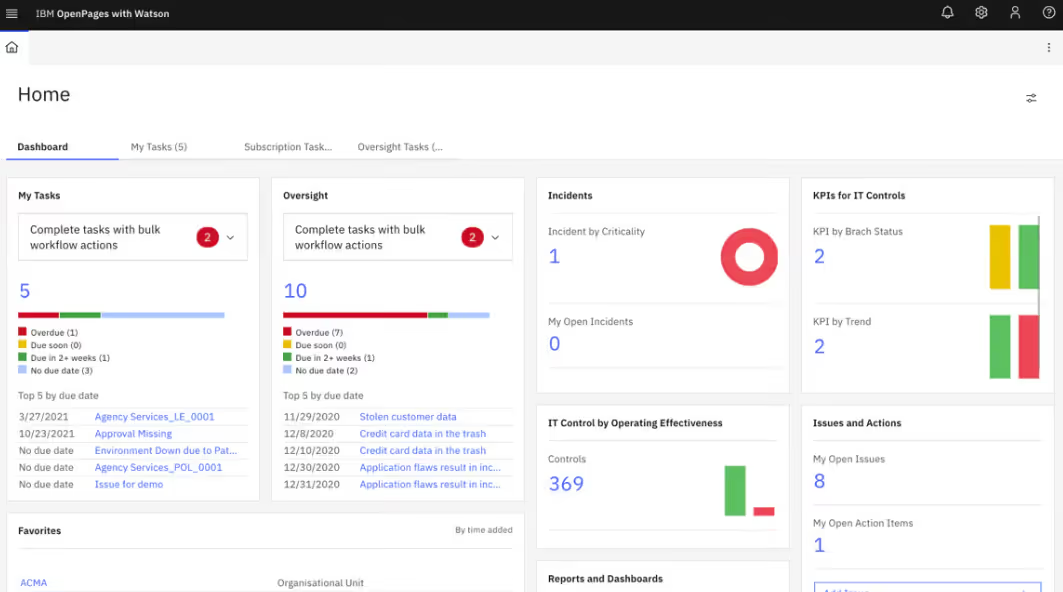
IBM OpenPages combines enterprise governance workflows with AI-assisted analytics and risk aggregation capabilities. It supports governance, compliance, operational risk, internal audit, and third-party oversight within a centralized enterprise platform. Its analytics capabilities help organizations identify trends, correlate risk domains, and improve enterprise reporting visibility. However, the platform is best suited for mature governance organizations with established operational processes.
Best for: Global enterprises with mature governance and risk management operations.
When to avoid it: Avoid it if you need streamlined deployment or focused TPRM workflows.
Score: 8.0/10
Modern / Mid-Market GRC Platforms
Modern GRC platforms prioritize usability, configurability, and faster deployment compared to legacy enterprise systems. These platforms are typically cloud-native and designed for organizations that need governance workflows without multi-year implementation projects. Look for:
- Cloud-native deployment
- Configurable workflows
- Cross-functional collaboration
- Faster implementation
- Flexible reporting and automation
5. AuditBoard (now Optro)
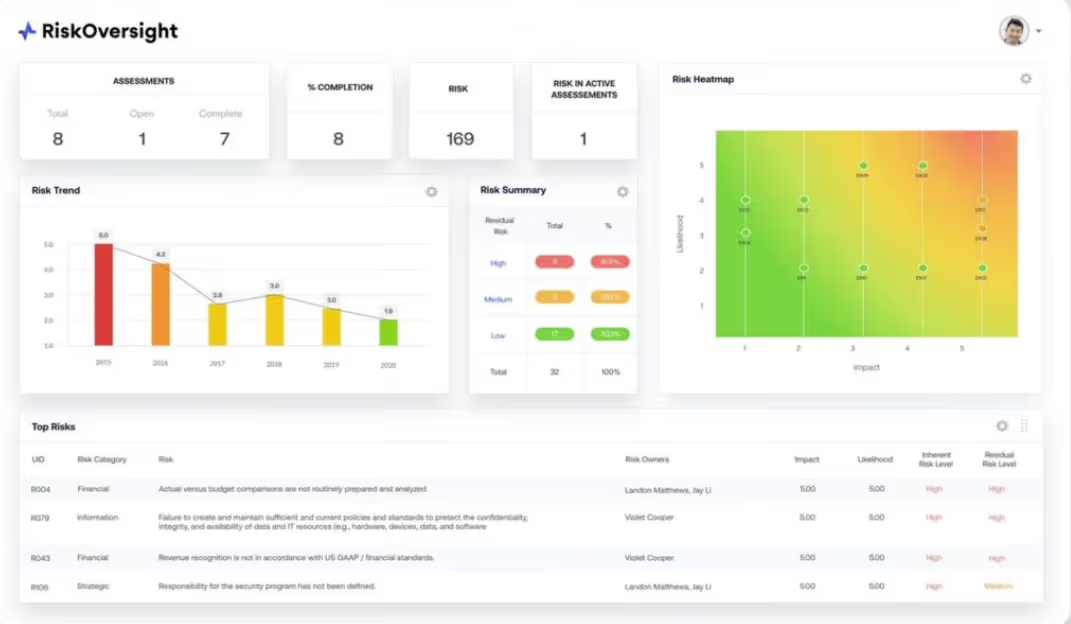
Optro is a modern governance platform focused heavily on audit, controls management, and compliance collaboration. It simplifies audit readiness, evidence management, and issue tracking through highly usable workflows.
Its biggest strength is operational usability. Teams can collaborate more effectively across audit, compliance, and risk functions without the administrative burden associated with many legacy enterprise GRC systems. The platform is less specialized for deep cyber exposure analysis or highly technical third-party investigations.
Best for: Mid-market and enterprise organizations modernizing audit and controls operations.
When to avoid it: Avoid it if your primary focus is cybersecurity-driven vendor exposure analysis.
Score: 8.4/10
6. LogicGate
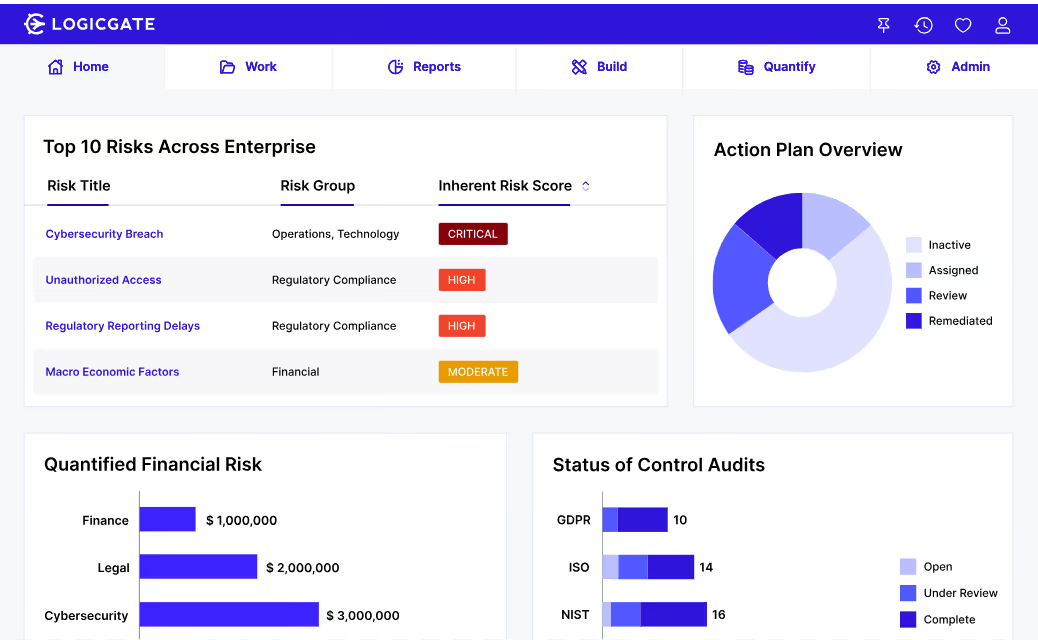
LogicGate’s Risk Cloud platform provides highly configurable governance and risk workflows across compliance, cyber risk, operational risk, and third-party oversight. Rather than imposing rigid governance structures, LogicGate enables organizations to design workflows aligned with their operational processes. This flexibility makes it attractive for organizations managing multiple risk programs inside a single platform. However, that configurability also means teams need sufficient internal process maturity to design and maintain workflows effectively.
Best for: Organizations seeking a flexible multi-program GRC platform.
When to avoid it: Avoid it if you want highly opinionated workflows out of the box.
Score: 7.9/10
7. Hyperproof
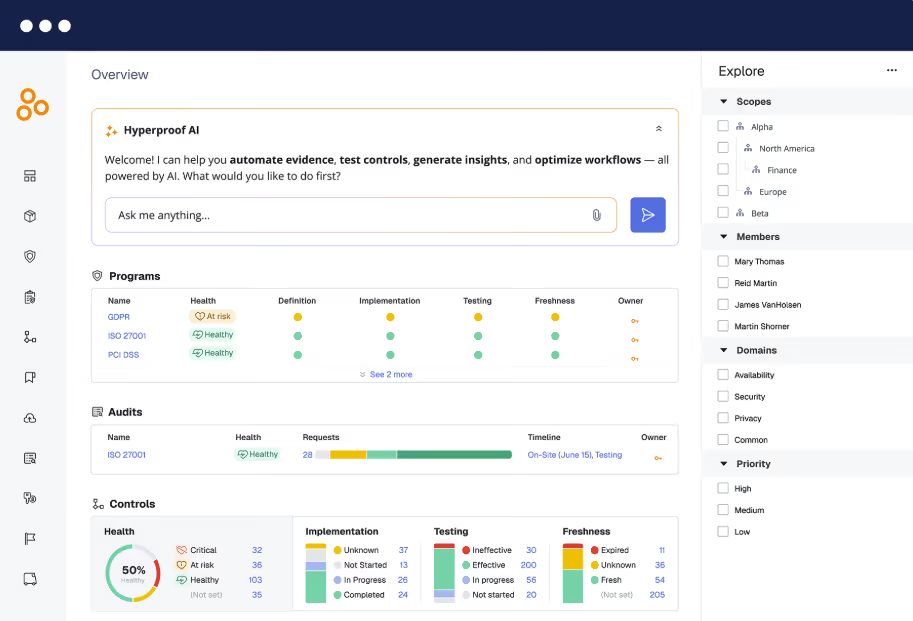
Hyperproof focuses on operational simplicity and continuous compliance management for cloud-native organizations. It streamlines evidence collection, control tracking, audit preparation, and cross-functional collaboration through a modern interface and lightweight deployment model. Its usability and implementation speed make it attractive to growing organizations that need a governance structure without enterprise-scale complexity. However, it does not offer the same enterprise depth as larger governance platforms.
Best for: Scaling organizations, modernizing compliance and governance operations.
When to avoid it: Avoid it if you require extensive enterprise governance customization.
Score: 7.8/10
Compliance Automation Platforms
Compliance automation platforms focus specifically on streamlining frameworks such as SOC 2, ISO 27001, HIPAA, and GDPR through integrations, evidence collection, and continuous controls monitoring. Look for:
- Automated evidence collection
- Continuous controls monitoring
- Framework mapping
- Audit workflows
- Integration ecosystem
8. Vanta
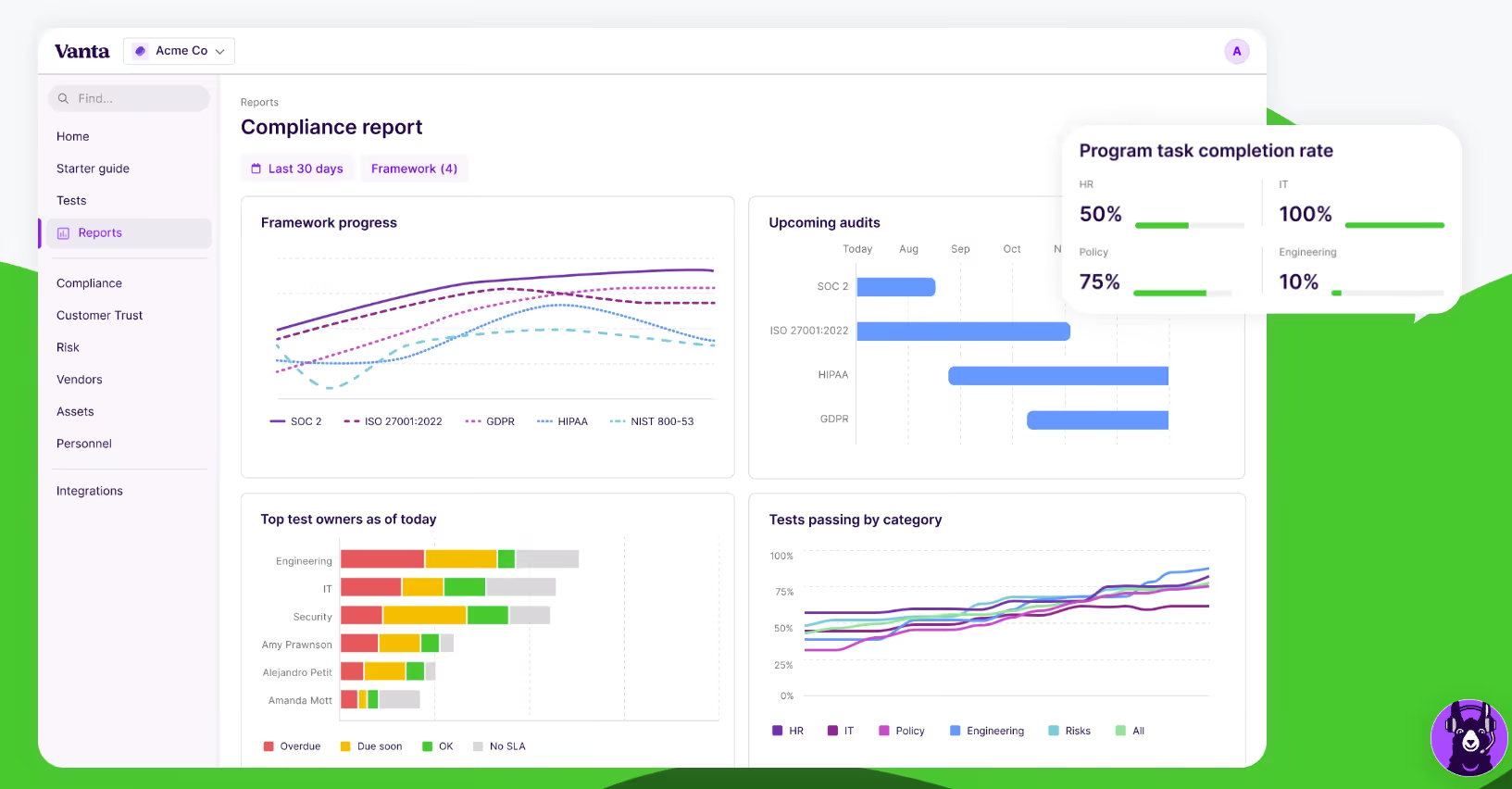
Vanta helped popularize compliance automation for cloud-native companies by simplifying compliance frameworks such as SOC 2, ISO 27001, and HIPAA. It automates evidence collection across cloud infrastructure, identity providers, devices, and HR systems while continuously monitoring controls and centralizing audit workflows. Its biggest strength is speed and usability, making it especially effective for lean security teams managing multiple frameworks without the overhead of a traditional GRC platform.
However, Vanta remains primarily compliance-oriented. It is strong at proving controls exist and keeping organizations audit-ready. Still, it is less focused on validating whether vendors create meaningful organizational exposure or how third-party risk maps into the actual environment.
Best for: Organizations prioritizing fast multi-framework compliance automation.
When to avoid it: Avoid it if you need deep third-party cyber exposure analysis.
Score: 8.4/10
9. Drata
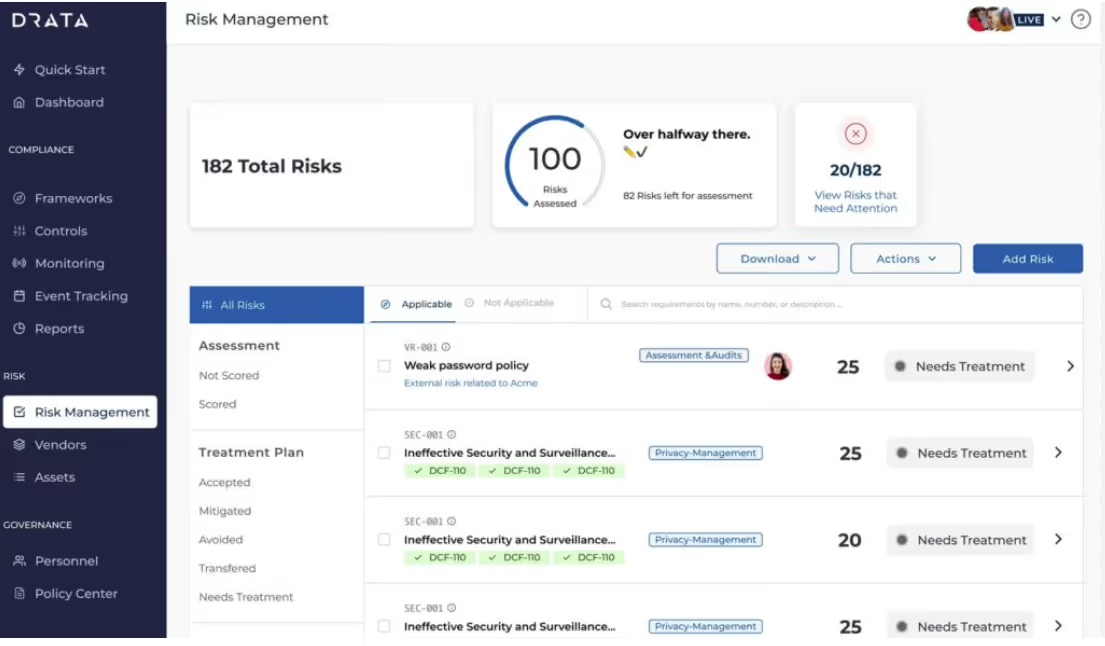
Drata combines continuous controls monitoring, automated evidence collection, and broad SaaS integrations to help organizations maintain ongoing compliance across frameworks such as SOC 2, ISO 27001, HIPAA, and GDPR. It is particularly effective for organizations operating across cloud and SaaS environments that want continuous audit readiness without heavy manual effort.
Its strength lies in operational efficiency. Drata streamlines auditor collaboration, policy management, remediation tracking, and control visibility from a centralized platform. However, its model remains focused on compliance execution and control monitoring rather than forensic validation of cyber exposure or relationship-aware vendor risk analysis.
Best for: Teams seeking continuous compliance operations with minimal manual overhead.
When to avoid it: Avoid it if your priority is evidence-driven vendor exposure validation.
Score: 8.1/10
10. Secureframe
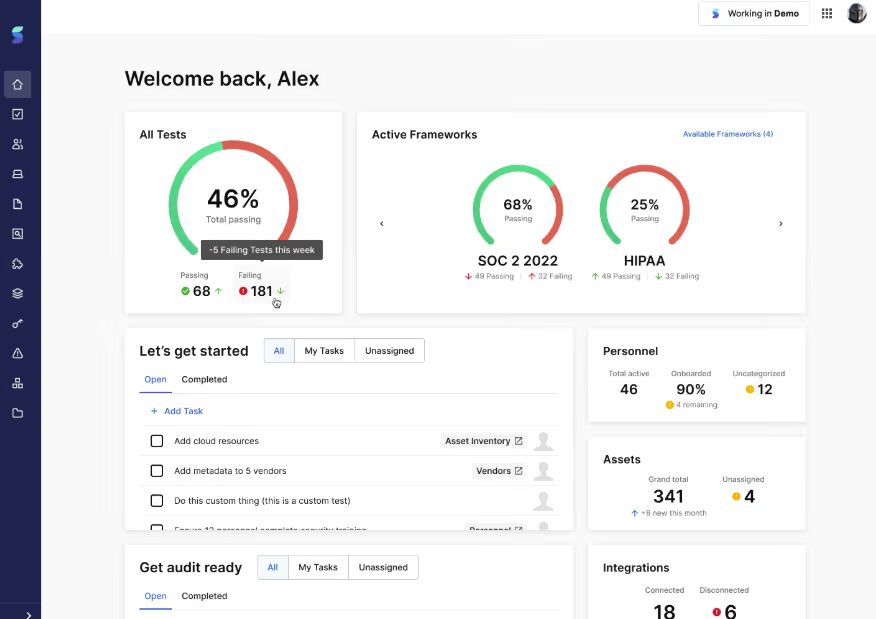
Secureframe helps organizations automate compliance operations through continuous evidence collection, automated control testing, policy management, and audit workflows. The platform integrates with cloud infrastructure, identity providers, HR systems, ticketing tools, and endpoint management platforms to continuously monitor security controls and reduce manual compliance work.
Its biggest strength is operational simplicity. Secureframe gives lean security and compliance teams a centralized system for managing controls, audit readiness, remediation tasks, personnel workflows, and evidence management without the implementation overhead of larger enterprise GRC platforms. It is particularly effective for organizations trying to scale compliance operations efficiently across cloud environments.
Best for: Lean security teams managing growing compliance obligations.
When to avoid it: Avoid it if your organization requires deep contextual vendor risk analysis.
Score: 8.0/10
Third-Party Cyber Risk Management (TPCRM)
Third-party cyber risk management platforms focus specifically on vendor exposure, organizational dependencies, and continuous third-party risk visibility. Unlike traditional governance systems, these platforms increasingly combine external intelligence, contextual analysis, and operational monitoring to understand how vendor relationships translate into actual exposure. Look for:
- Continuous risk signal collection
- Forensic artifact analysis
- Blast radius mapping
- External intelligence and OSINT
- Context-aware risk prioritization
11. Lema.ai
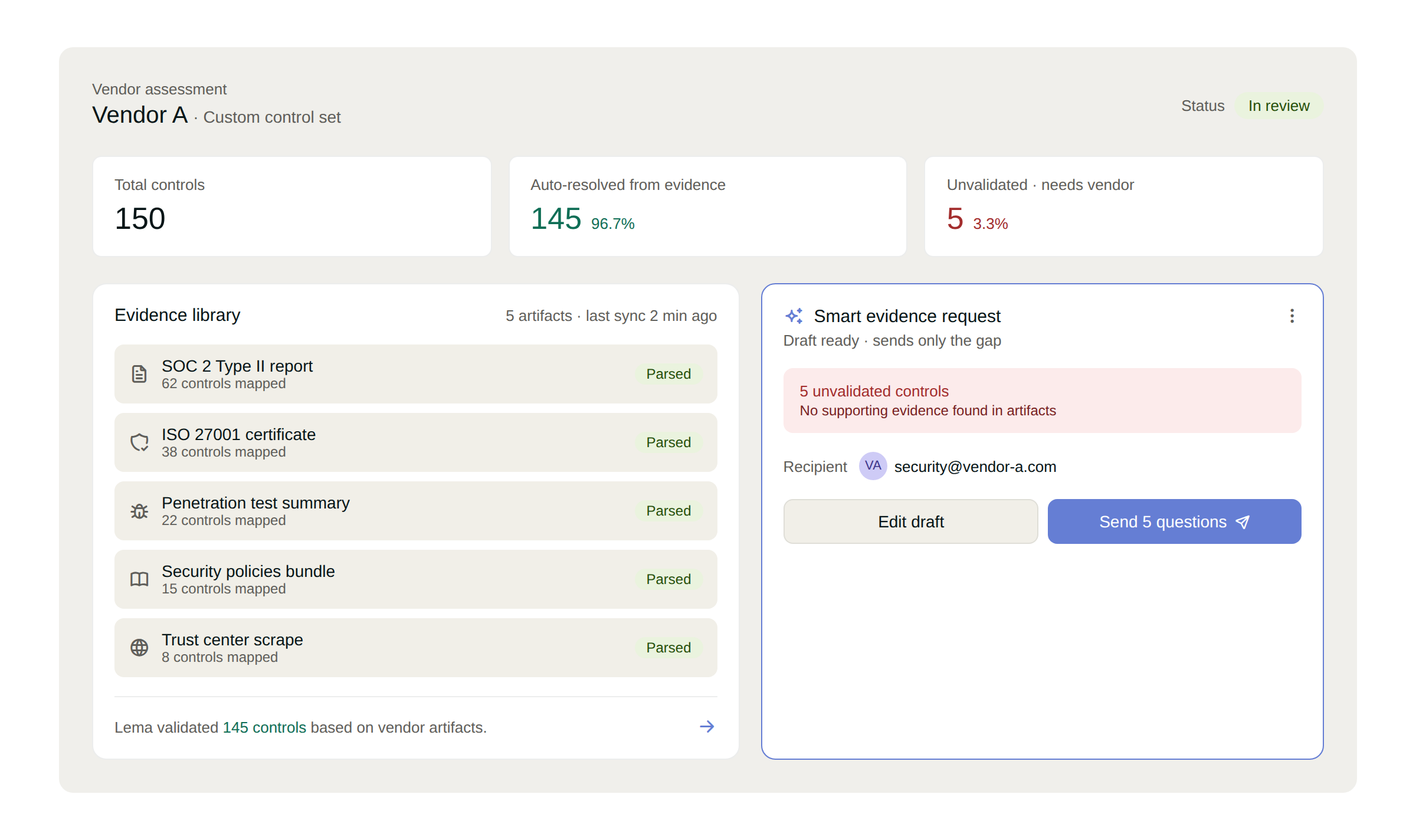
Lema is an Agentic TPRM and Risk Engineering platform that surfaces actual vendor exposure. It uses Forensic AI Assessment to analyze vendor artifacts, validate claims against publicly available intelligence, and surface evidence-based third-party risk. The platform also maps blast radius during the assessment process to understand how a vendor connects to the organization’s environment, including access levels, sensitive data exposure, operational dependencies, and potential business impact if that vendor is compromised or disrupted.
The tool continuously collects external risk signals, such as breaches, adverse media coverage, and product changes, while monitoring how vendors are actually used within the organization. Lema’s Agentic Risk Engineering layer correlates these signals to surface prioritized findings and remediation guidance, helping teams identify not only whether a vendor appears compliant, but whether it introduces meaningful organizational exposure.
Best for: Security-led organizations that want evidence-backed third-party exposure analysis and continuous vendor risk validation.
When to avoid it: Avoid it if your primary goal is broad enterprise governance management or checkbox-driven audit workflows.
Score: 9.5/10
12. UpGuard
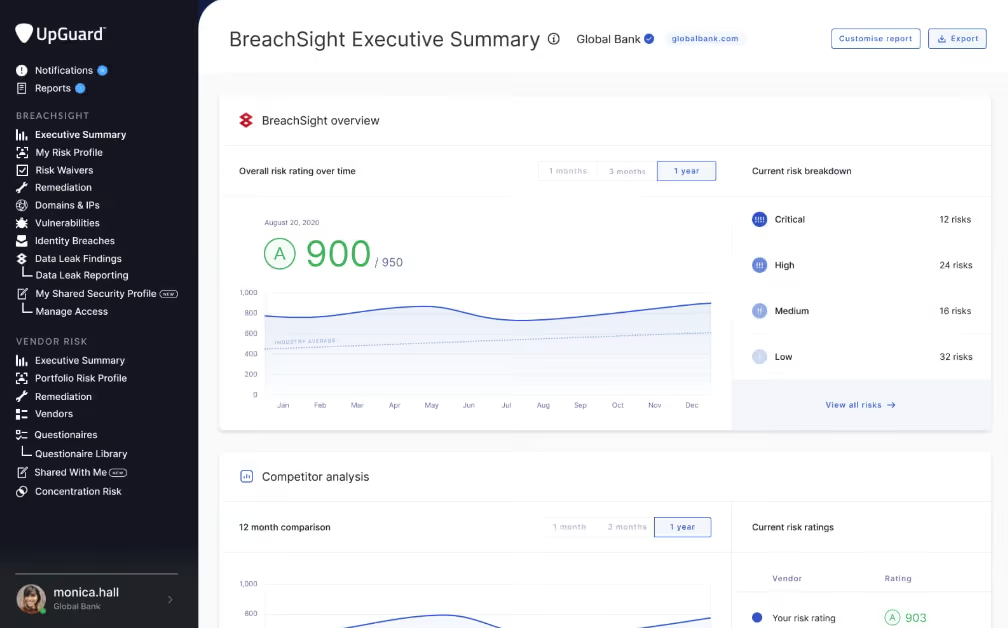
UpGuard combines vendor questionnaires, attack surface visibility, and continuous monitoring into a relatively accessible third-party risk platform. Its strength lies in helping organizations monitor external posture across large vendor ecosystems and complex product lifecycles without requiring highly mature governance operations. Teams can track vendor security issues, monitor changes, and streamline assessments from a centralized platform.
However, its understanding of how vendors affect internal organizational exposure remains more limited than that of deeper exposure-based models.
Best for: Mid-market organizations scaling vendor monitoring and third-party oversight.
When to avoid it: Avoid it if you require highly contextual exposure mapping and forensic validation.
Score: 7.9/10
13. Panorays
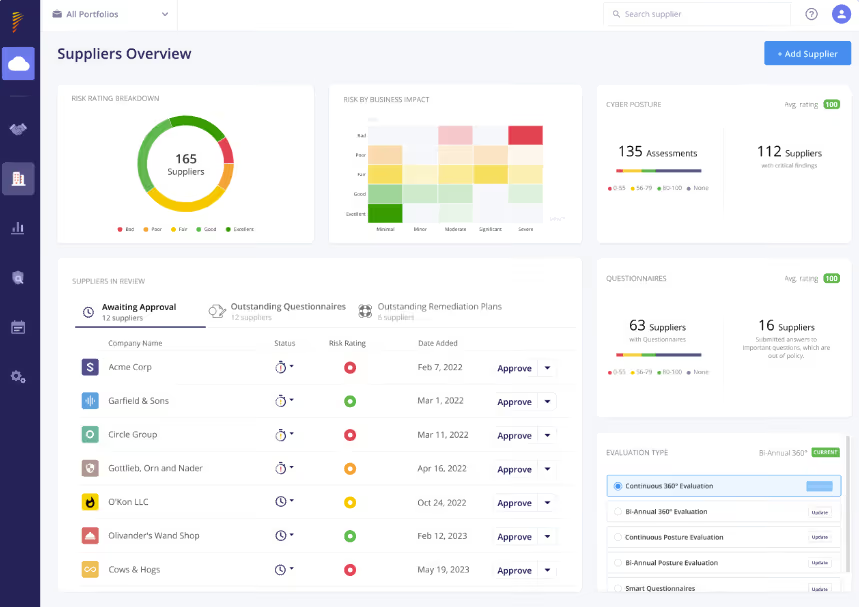
Panorays combines automated security assessments with continuous external monitoring to streamline third-party cyber risk operations. The platform uses both internal questionnaires and external attack-surface analysis to build a hybrid vendor risk model, which allows organizations to scale vendor assessments more efficiently than traditional manual workflows.
However, Panorays primarily focuses on streamlining and operationalizing the vendor assessment lifecycle itself. Its model improves scalability and ongoing oversight, but it remains more assessment-centric than exposure-centric. Unlike platforms such as Lema, which forensically analyze vendor artifacts, validate claims against open-source intelligence, and map blast radius directly into organizational context, Panorays places less emphasis on evidence-driven exposure validation and relationship-aware risk analysis.
Best for: Organizations scaling vendor risk programs with automation and monitoring.
When to avoid it: Avoid it if you require a highly evidence-driven forensic risk analysis.
Score: 7.8/10
Security Ratings and Quantification
Security ratings and cyber risk quantification platforms provide outside-in monitoring, benchmarking, and financial modeling capabilities. These tools are useful for broad visibility and executive communication, but they generally operate without full awareness of the internal organizational context. Look for:
- External attack surface monitoring
- Security scoring and benchmarking
- Threat intelligence integration
- Financial risk modeling
- Executive-level reporting
14. SecurityScorecard
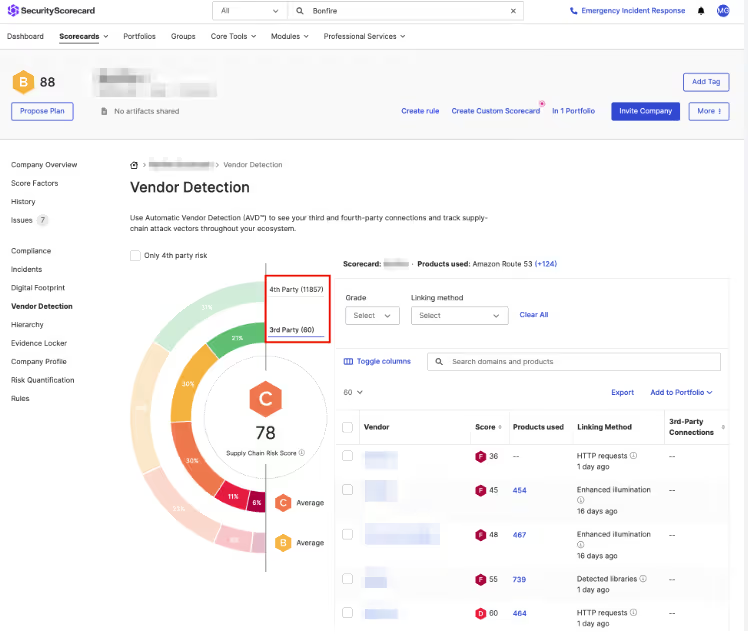
SecurityScorecard provides continuous, outside-in visibility into vendor cyber posture by analyzing publicly observable signals, including exposed services, vulnerabilities, DNS configurations, patching behavior, and breach indicators. Its biggest strength is scalability. Organizations can monitor thousands of vendors simultaneously without requiring direct engagement or lengthy assessments. However, these scores remain external abstractions unless paired with an internal organizational context.
Best for: Organizations monitoring large third-party ecosystems at scale.
When to avoid it: Avoid it if you need evidence of actual organizational impact and exposure.
Score: 7.5/10
15. BitSight
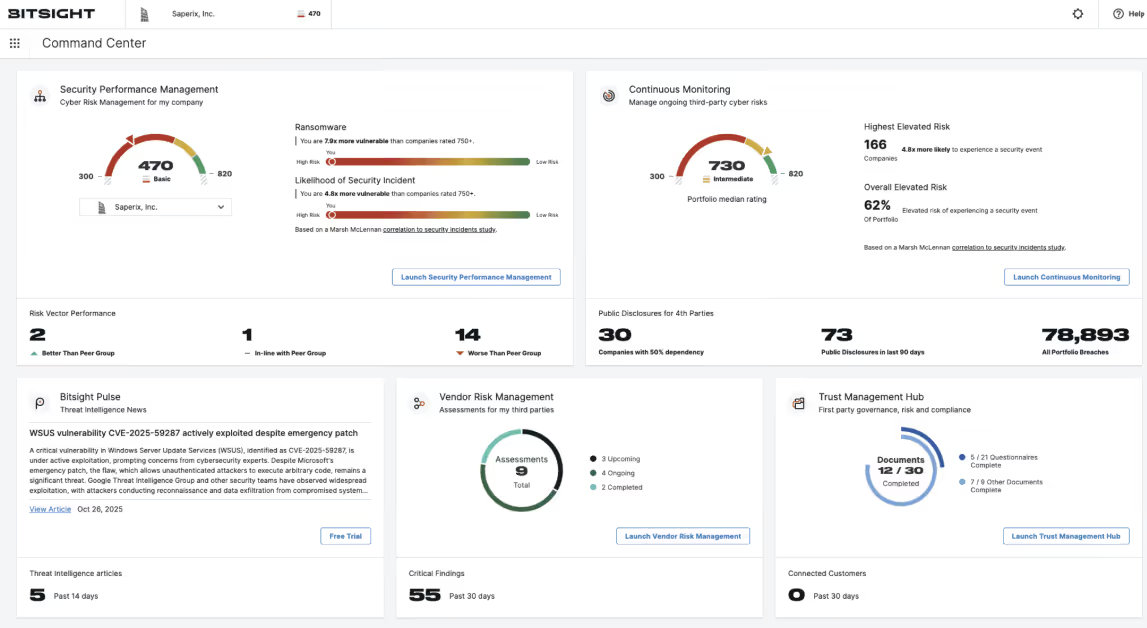
BitSight focuses on continuous external posture monitoring and attack surface visibility. It tracks vulnerabilities, network exposure, configuration issues, and historical incidents to generate security ratings across vendor ecosystems. It is especially useful for identifying elevated external risk and monitoring changes over time. Like other ratings platforms, however, it cannot fully understand how a vendor relationship maps to internal operational exposure.
Best for: Organizations prioritizing continuous external monitoring and benchmarking.
When to avoid it: Avoid it if your risk decisions depend heavily on internal business context.
Score: 7.6/10
16. Black Kite
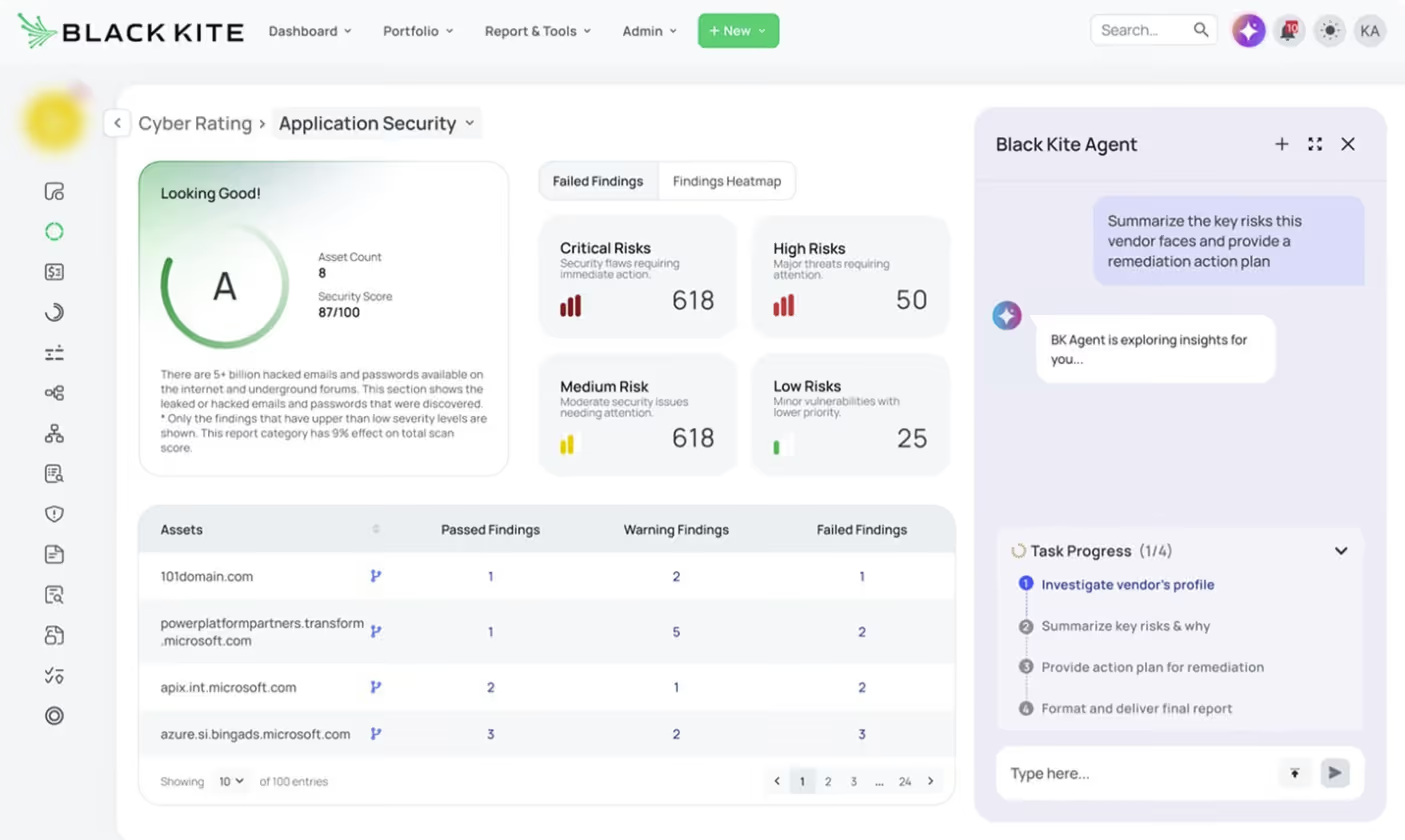
Black Kite expands on traditional security ratings by incorporating threat modeling and business-impact-oriented cyber intelligence. The platform maps external findings to frameworks such as MITRE ATT&CK and contextualizes vendor weaknesses through modeled business impact scenarios. That gives organizations stronger strategic framing than pure scoring alone. Still, its perspective remains largely outside-in.
Best for: Enterprises seeking cyber intelligence with a stronger executive-level context.
When to avoid it: Avoid it if your program depends on internal exposure validation and artifact analysis.
Score: 7.9/10
17. SAFE
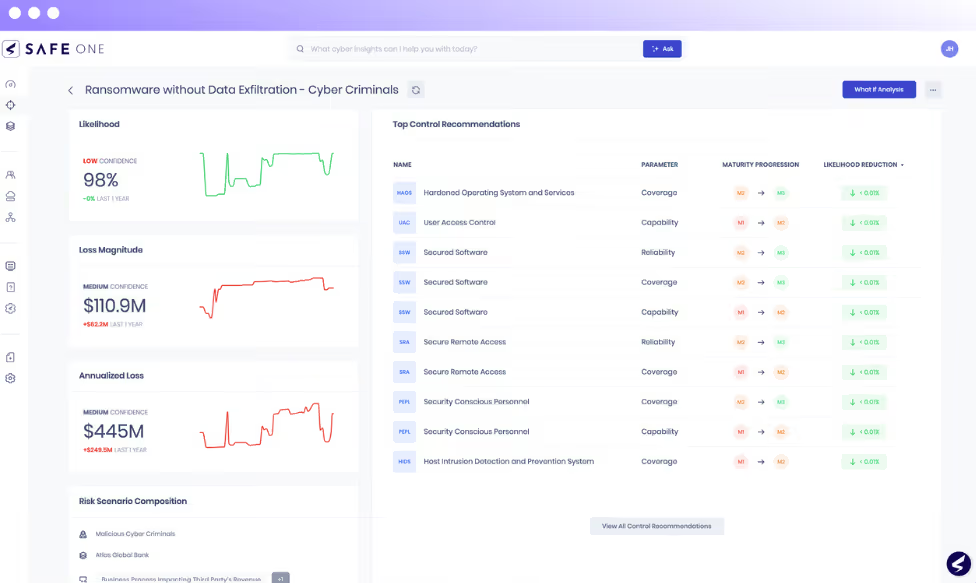
SAFE Security approaches cyber risk through financial quantification rather than governance workflows or external scoring. Using FAIR-based models and scenario analysis, SAFE translates technical cyber risks, including risks tied to perimeter security, into estimated business and financial impact. This makes the platform particularly valuable for CISOs and security leaders communicating cyber risk to executives, boards, and business stakeholders. However, SAFE is not designed to operationalize day-to-day third-party onboarding or vendor assessment workflows.
Best for: Security leaders requiring board-level cyber risk quantification.
When to avoid it: Avoid it if your primary need is operational TPRM execution.
Score: 8.0/10
Choosing the Right GRC Platform for Your Risk Model
GRC is no longer a single category; treating it as one is where most buying decisions go wrong. The platforms in this space solve very different problems, from managing controls and audits to coordinating vendor workflows or monitoring external posture. Each has value, but they operate at different layers of the risk lifecycle. The real question is not which tool is “best,” but which one aligns with how your organization understands and acts on risk.
If your priority is running structured processes, such as managing assessments or tracking controls, many platforms on this list will do so well. But if the goal is to understand where third-party risk actually exists, how it affects your environment, and what needs to be addressed, that requires a different approach.
Lema’s Agentic-AI Risk Engineering platform uncovers and reduces third-party exposure. Instead of relying on questionnaires or static assessments, it analyzes vendor artifacts, gathers external intelligence, and maps how each vendor actually interacts with your environment.
By combining forensic artifact analysis, open-source intelligence, and blast radius mapping, Lema determines whether a vendor poses a real risk to your organization and prioritizes what needs to be fixed. The result is not another workflow or score, but an evidence-backed view of exposure and clear remediation steps.
Book a demo to see the risks that questionnaires, trust centers, and security ratings don’t surface.

FAQs
What Is An Example Of A GRC Tool?
A common example of a GRC (Governance, Risk, and Compliance) tool is a centralized software platform that brings together risk management, policy enforcement, and compliance tracking into a single system, helping organizations maintain control and oversight across complex operations.
What Do GRC Tools Do?
GRC tools help organizations identify, assess, and mitigate risks while ensuring adherence to regulatory requirements and internal policies. They streamline processes like audits, reporting, and compliance tracking, often using automation to reduce manual work and provide real-time visibility into risk exposure and governance performance.
Which Is The Best GRC Tool?
The best GRC tool depends on an organization's specific needs and maturity. Still, the most effective solutions combine strong automation, clear risk visibility, scalability, and seamless integration with existing systems to support proactive, organization-wide risk and compliance management.
