
How to Build a Third-Party Risk Management (TPRM) Framework

.png)
Most organizations don’t start from zero when building a third-party risk management framework. There are established models, familiar lifecycle stages, and no shortage of guidance from NIST and ISO, along with industry-driven approaches to third-party assessments.
And yet, 60% of CISOs report an increase in third-party security incidents, and only 15% say they have full visibility into those risks. Frameworks are built around the idea of a defined vendor relationship - something you onboard, assess, and periodically review. In reality, vendor risk behaves more like a moving attack surface, where usage expands, and new exposures appear long after onboarding.
As a result, organizations often manage third-party risk with incomplete or outdated maps of their own environments. Building an effective TPRM framework today requires moving toward continuous, full visibility into how vendors operate and impact the business.
What Is a Third-Party Risk Management (TPRM) Framework?
A Third-Party Risk Management (TPRM) framework is a structured set of policies, processes, and controls used to identify, assess, manage, and monitor risks introduced by external vendors. It defines how an organization evaluates third parties across their lifecycle, from onboarding to offboarding, and ensures that risk decisions are consistent, defensible, and aligned with business priorities.
At its core, a TPRM framework should enable three things:
- Consistent evaluation, so that supplier risk is assessed using repeatable logic.
- Prioritization, so that critical vendors receive deeper scrutiny than low-impact ones.
- Decision-making support that enables security and business stakeholders to clearly understand risk and act on it.
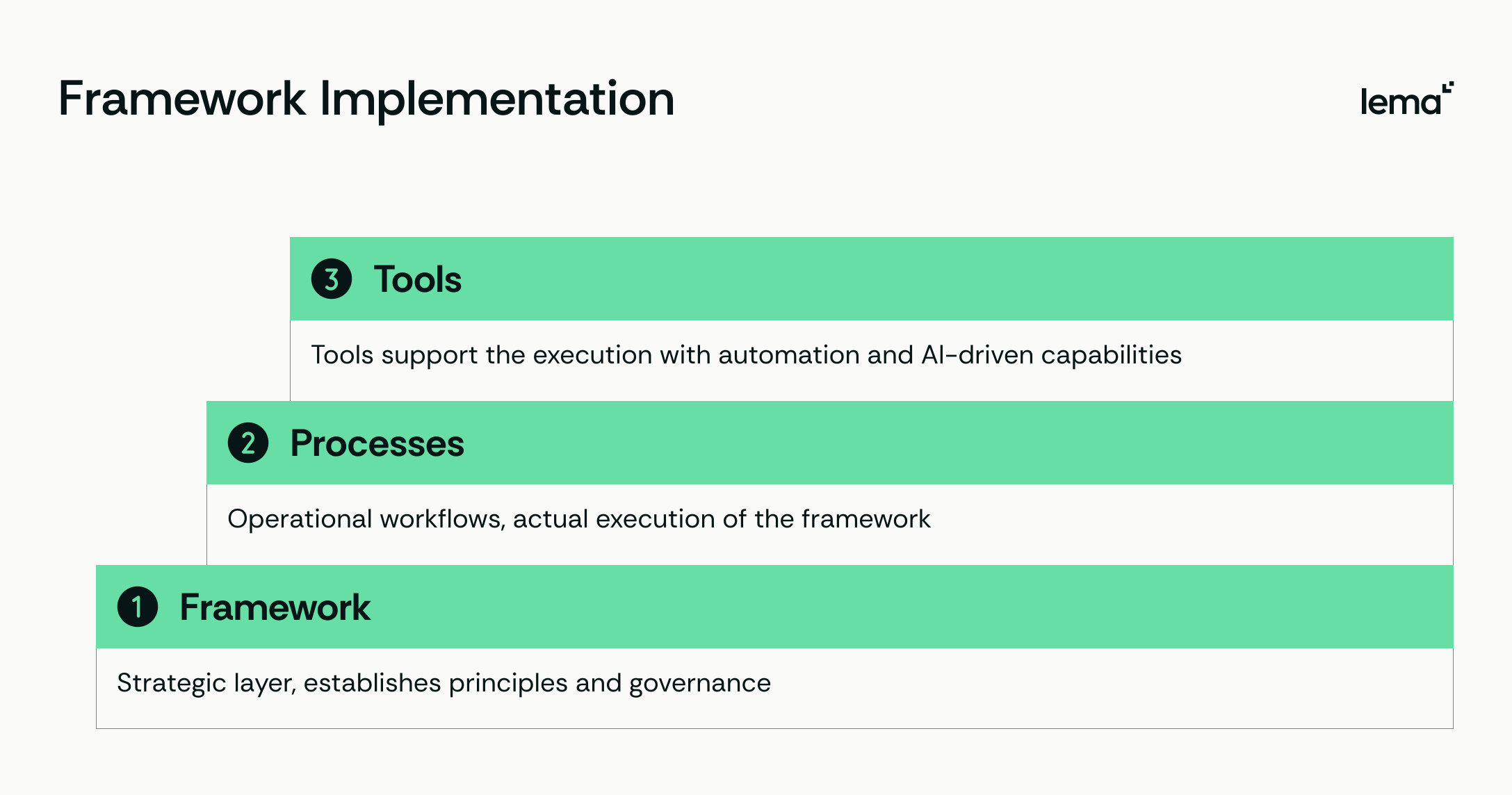
It’s important to distinguish between the framework itself, the processes it defines, and the tools used to execute it. The framework is the strategic layer; it defines principles and governance. Processes are the operational workflows, such as onboarding assessments or periodic reviews. You then use tooling to support execution, but this tooling doesn’t define the framework.
In practice, these layers often blur. Teams adopt a platform and inherit its workflows, scoring logic, and evidence model as a proxy for a framework. That creates a common failure mode: the program becomes good at moving assessments forward and generating audit artifacts, but weak at answering harder questions, such as whether controls are actually effective and what the real blast radius would be if the vendor failed.
The Core Components of a Third-Party Risk Management Framework
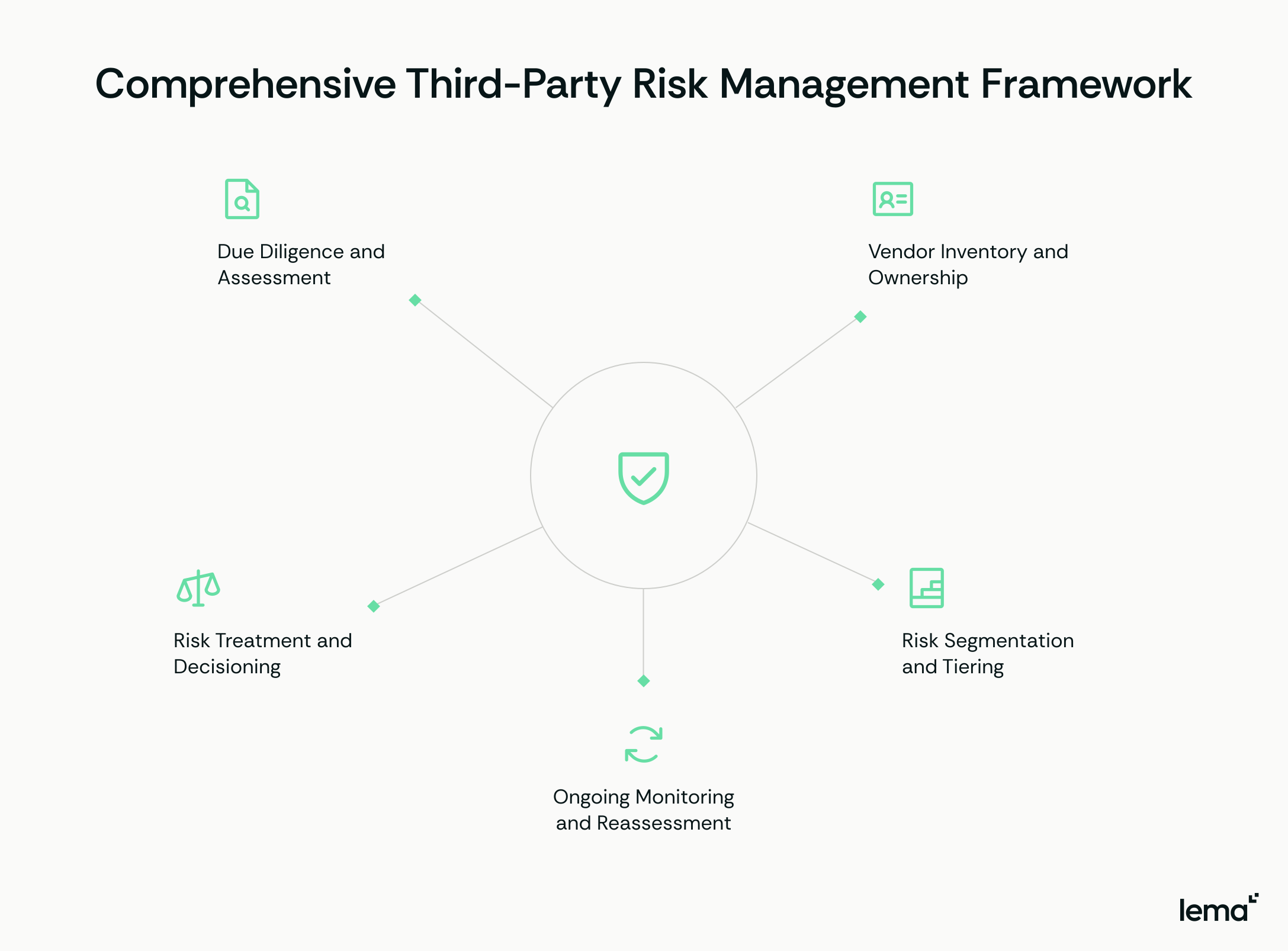
A well-structured TPRM framework aligns with broader risk and security expectations defined in standards such as NIST and ISO 27001, while translating those principles into operational components that govern how you identify and manage vendor risk. While implementations vary, these core components remain consistent across mature programs.
1. Inventory and Ownership
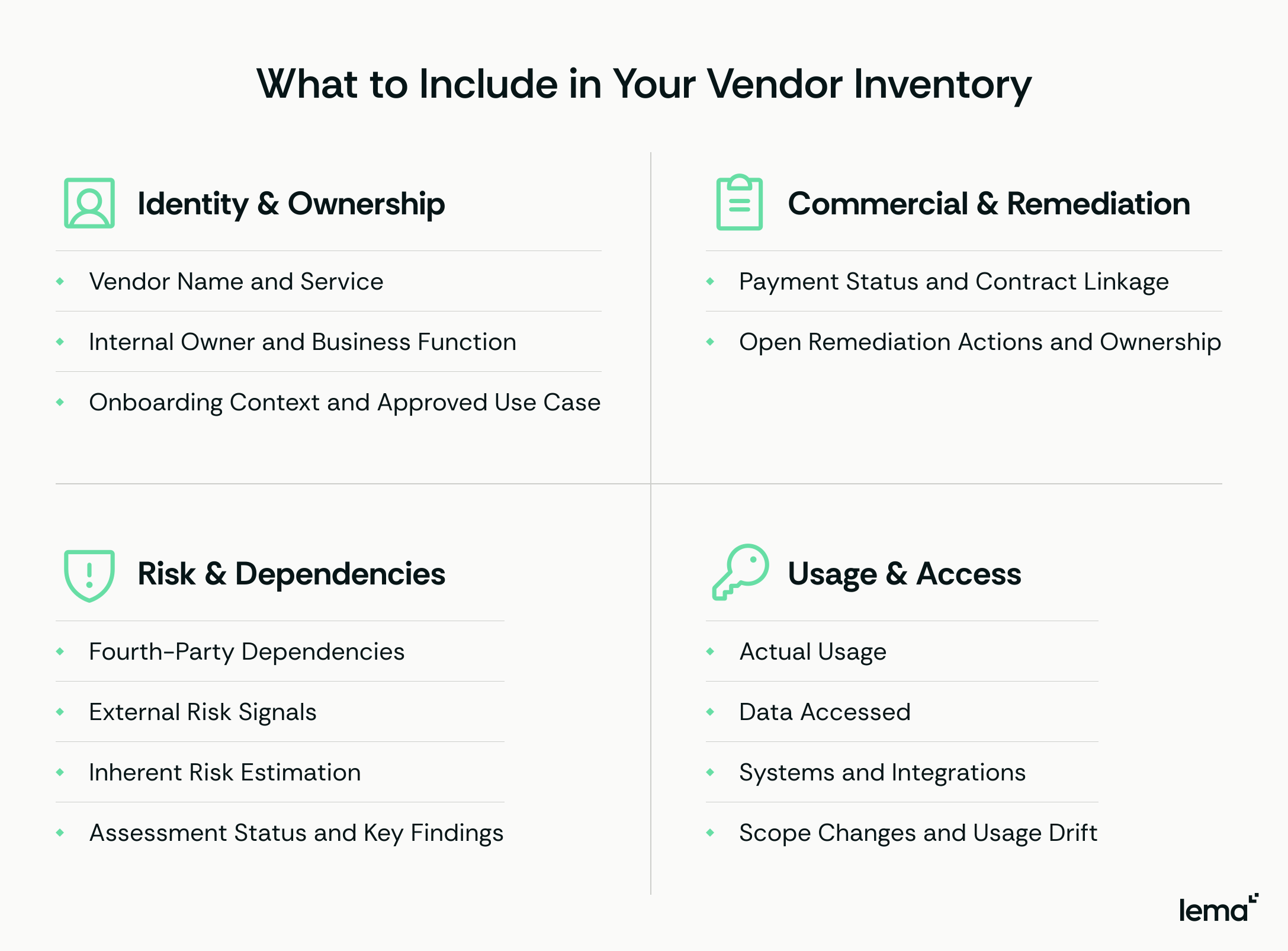
A centralized, continuously maintained vendor inventory provides a structured view of all third parties, including their use cases, integrations, data access, and business-criticality. Equally important is ownership. Every third-party must have a clearly defined internal owner responsible for its use, risk posture, and ongoing oversight.
2. Risk Segmentation and Tiering
Risk segmentation determines how you classify your vendors and, more importantly, how you treat them within the framework. Classification is often based on objective factors such as data sensitivity, system access level, regulatory exposure, and operational dependency.
3. Due Diligence and Assessment
Due diligence defines how you evaluate vendor risk before and during engagement. In many programs, this relies heavily on long questionnaires and vendor-submitted documentation. While these inputs are necessary, effective due diligence requires validating claims against available evidence and cross-referencing external signals.
4. Risk Mitigation and Remediation
Once you identify risks, the framework must define how you and your team handle them: whether you accept, mitigate, transfer, or escalate them, and who is responsible for making those decisions. Risk treatment should directly tie to business impact, so decisions reflect real operational consequences. For critical vendors, that includes understanding the financial exposure of a failure and what revenue recovery solution the business would need to absorb the disruption. This also establishes clear accountability across stakeholders.
5. Ongoing Monitoring and Reassessment
Ongoing monitoring ensures that the framework reflects changes as they occur. It includes periodic reassessments as well as event-driven triggers such as security incidents, newly disclosed vulnerabilities, changes in vendor usage, or external intelligence signals. Frameworks that rely solely on point-in-time reviews inevitably fall behind.
7 Steps to Build a Third-Party Risk Management Framework
Step 1: Define Governance, Scope, and Ownership
Every effective framework starts with clarity on ownership. Security, procurement, legal, and compliance all play roles, but without clear accountability, decisions stall, and risk falls through the cracks. Define who owns the framework, who is responsible for vendor assessments, who has authority to approve or reject risk, and how escalation works when risk exceeds acceptable thresholds.
Be explicit about exception handling. If a business team wants to onboard a vendor before remediation is complete, the framework should define who can approve that exception, what compensating controls are required, how long the exception remains valid, and when reassessment must occur.
Scope is equally critical, as all relevant vendors must be visible. SaaS tools, service providers, and increasingly, AI-driven tools bypass traditional procurement channels. Establish a clear intake process for new vendors to ensure nothing enters the environment without being assessed, and ensure the framework aligns with business priorities so that risk decisions support operations.
Step 2: Build and Maintain a Complete Vendor Inventory
Most organizations don’t have a vendor inventory; they have a procurement list. And that misses the real problem: shadow IT and shadow AI. Teams adopt tools independently, often connecting them directly to sensitive data, without ever going through formal approval.
To fix this, build the inventory from system data, because without this, vendor risk management becomes an exercise in assumptions. Use your identity provider to see which applications your team is actively using, finance systems to confirm which third parties are being paid, and security or IT tools to understand integrations and access. These systems should continuously feed data into the inventory so it reflects actual usage and access.
Then, the focus shifts to maintaining context. Each third-party should have a defined owner, a clear use case, and visibility into what data and systems it touches. The goal is a living inventory that updates as suppliers are added, removed, or change in scope, because that’s what your risk actually depends on.
Step 3: Establish Risk Segmentation and Tiering Logic
Define clear, objective criteria for tiering vendors. This criterion typically includes data sensitivity (such as customer or financial data), level of system access (read vs write, production vs non-production), and operational dependency (how critical the vendor is to business continuity). These inputs should be standardized and captured during intake to ensure classification is applied consistently across all suppliers.
Once defined, apply this logic to assign vendors to risk tiers that directly determine the depth of third-party risk monitoring. High-impact third parties should trigger deeper due diligence and continuous oversight, while low-risk third parties should follow a lighter process. The goal is not categorization for its own sake, but ensuring effort is focused where exposure is highest. Without this, teams either waste time over-assessing low-risk vendors or fail to scrutinize the ones that matter most properly.
Step 4: Design a Due Diligence and Assessment Methodology
Designing a due diligence methodology means defining how vendor risk is evaluated in a consistent, risk-based way, including the inputs required and the process for validating findings before a decision is made.
Traditional approaches rely heavily on questionnaires and vendor-provided documentation, assuming that what they submit is accurate and complete. Documentation reflects what they claim, not how controls actually operate, which leads to assessments that are thorough on paper but weak in validation.
The key action is to define a methodology that prioritizes verification over collection. Start by scoping assessments by risk tier, focusing on the controls that matter for the specific third party. Then establish how evidence will be evaluated, what constitutes sufficient proof, how gaps are identified, and how inconsistencies trigger follow-up.
Lema's Agentic TPRM platform operationalizes this model through Forensic AI Assessment, which combines artifact analysis with OSINT Recon, reviewing vendor documentation against your control requirements while pulling publicly available evidence to validate vendor claims rather than taking documentation at face value. The result is evidence-backed findings that reflect how controls actually operate, not just how they are described.
.png)
Step 5: Define Risk Treatment, Approval, and Contractual Controls
Define how your team handles risk based on severity and business impact. Decide when to accept, mitigate, transfer, or escalate risk, and tie each path to a defined risk appetite. Set clear thresholds for escalation and assign decision authority so approvals don’t depend on individual judgment. Treatment options should be more precise than a simple accept-or-escalate decision. In practice, that can include:
- Restricting the third-party to a smaller data set
- Limiting production access
- Requiring SSO or logging before approval
- Mandating contract language around incident notification and subcontractor use
- Approving only a narrow deployment until evidence gaps are closed
Step 6: Implement Continuous Monitoring and Reassessment Triggers
Identify the signals that should trigger reassessment. Track external events, as well as internal changes like new integrations, expanded access, or shifts in usage. Then, use these signals to trigger targeted reassessments. Combine two views: what happens to the vendor and what happens inside your environment.
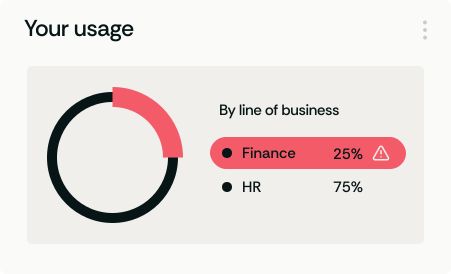
Lema's Blast Radius Monitoring tracks both sides of the equation. On the external side, it gathers publicly available information about each vendor (policy changes, adverse media) to surface posture changes vendors don't volunteer. On the internal side, it tracks how each vendor is actually used in your environment, including access to systems and data, usage across teams, scope drift, and unsanctioned third-party access. By correlating the two, you can determine whether a vendor-side change actually matters for your organization and understand its real impact.
Step 7: Plan for Incident Response and Secure Offboarding
This step defines how you contain and remove third-party risk. Build vendor-specific incident response procedures. Define who gets notified, how teams escalate issues, and how they contain exposure. When a vendor is compromised, your team must quickly identify affected systems, data, and processes and act without delay.
Platforms like Lema map how vendors are actually used across your environment, tracking access, integrations, and scope drift, so when something goes wrong, you already know what’s exposed and where to act.
Treat offboarding as a risk control: revoke access, remove integrations, and confirm that the third-party no longer connects to your environment. Validate that data has been returned or deleted and that no residual dependencies remain.
Rethinking the Framework, From Process to Exposure
Most TPRM frameworks are optimized for compliance and can help you demonstrate due diligence successfully. A modern framework has to distinguish between what a vendor says and what your exposure actually looks like.
Lema’s Agentic TPRM and Risk Engineering platform enables you to understand vendor risk as it exists and act on it immediately. It analyzes documentation to uncover gaps and inconsistencies, brings in external signals that vendors don’t control, and tracks how each vendor is actually used across your environment.
Then, its Agentic Risk Engineering turns those signals into findings, telling you exactly what you need to address with clear remediation steps. Instead of leaving you to piece together disconnected findings on your own, Lema shows you what matters and what to do next.
Book a demo to see the risks your questionnaires and vendor attestations fail to surface.

FAQs
What Is a Third-Party Risk Management Framework?
A third-party risk management (TPRM) framework is a structured approach organizations use to identify, assess, manage, and reduce the risks posed by external suppliers and partners, extending beyond traditional perimeter security to cover the risks introduced through third-party access. It defines how risk is handled across the full lifecycle, from onboarding to offboarding, ensuring that risks are not only documented but continuously understood as relationships evolve.
What Are the 5 Phases of Third-Party Risk Management?
The five phases start with onboarding and risk identification, during which vendors are scoped, and their potential impact is understood. Then there is risk assessment, during which you review documentation and evidence. The third phase is due diligence and validation, when you verify vendor claims and address gaps. Next is ongoing monitoring, and finally, there is offboarding and remediation, when you remove access and close any residual risks.
What Are the 5 Components of the Risk Management Framework?
Risk identification identifies the risks, while risk assessment evaluates their likelihood and potential impact. Risk mitigation focuses on reducing or controlling those risks through specific actions or controls. Risk monitoring ensures that risks are tracked over time as conditions change, and governance provides the structure of policies, ownership, and accountability needed to manage risk consistently.
What Is the Difference Between TPRM and GRC?
The difference between TPRM and GRC comes down to scope and focus. GRC, which stands for governance, risk, and compliance, is a broad discipline that manages policies, controls, regulatory requirements, and enterprise-wide risk across the organization. TPRM sits within that umbrella but focuses specifically on risks introduced by third parties. While GRC platforms often centralize compliance workflows and audit records, TPRM focuses on understanding how third parties actually affect security.
