
9 Use Cases for GRC Automation to Implement Today


GRC automation is now a fixture of most security and risk programs. But in practice, it has largely been applied to process efficiency rather than to how risk is actually understood. Workflows move faster, and audit trails are cleaner, yet the underlying model remains unchanged: vendors self-attest, documents are reviewed in isolation, and assessments capture a fixed point in time.
The gaps this creates are becoming harder to ignore. According to IBM, 97% of organizations that experienced an AI-related security incident lacked proper AI access controls, and 63% lacked AI governance policies - reflecting how quickly new vendor categories outpace existing oversight programs. Automating documentation and workflow completion doesn't fix this; it scales the same limitations faster.
What organizations need is automation that improves how risk is actually derived, validated, and connected to real business exposure.
What Is GRC Automation?
GRC automation refers to the use of technology to streamline governance, risk, and compliance processes. In practice, this has largely meant digitizing and accelerating the mechanics of the process, including:
- Sending vendor questionnaires
- Collecting supporting documentation
- Tracking assessment progress
- Generating audit-ready reports
Modern GRC solutions bring structure and consistency to workflows. However, in many implementations, automation has been applied primarily to how teams collect and process information, rather than to how they actually evaluate risk.
Teams still rely heavily on vendor responses as a primary input, while reviewing supporting documents in isolation and working from assessments that capture only a fixed moment in time. This approach breaks down in large, interconnected vendor ecosystems, where a vendor’s role rarely stays confined to its original scope. Variations in usage levels and integrations can reshape the risk profile without being reflected in existing assessments.
As a result, expectations around GRC automation are changing. Organizations are placing greater emphasis on validating information against evidence and on maintaining a current view of how vendors operate within the business. Automation is beginning to move beyond workflow support toward a more analytical, exposure-focused approach to risk management.

What’s Putting Pressure on GRC Today
- Rising demand for provable security and compliance: Stakeholders no longer accept certifications or vendor attestations at face value. They expect clear evidence of the implementation and effectiveness of control.
- Time-intensive compliance work is draining resources: GRC teams still spend disproportionate time reviewing documents, chasing vendors, and maintaining spreadsheets. The issue is that this effort rarely improves risk clarity, leaving teams busy yet less informed.
- An exploding number of SaaS tools and third-party dependencies: Vendor ecosystems have expanded rapidly, with SaaS and AI tools embedded across the business. As AI increasingly influences how teams discover and evaluate software, many tools are adopted quickly and become deeply integrated, increasing both the number of vendors and the complexity of understanding how risk actually propagates.
- Manual security reviews create bottlenecks: Supplier risk assessments still depend heavily on individual analysts, leading to inconsistent outcomes and making scaling difficult. As volume increases, bottlenecks lead to slow onboarding and force trade-offs between speed and depth.
- GRC processes are struggling to keep pace with business growth: Most GRC programs rely on point-in-time assessments, while vendor usage, access, and integrations change continuously. Teams are making decisions based on outdated snapshots rather than current exposure.
9 Use Cases for GRC Automation to Implement Today
1. Replacing Questionnaire Reviews with Automated Evidence Validation
Today, teams manually read PDFs, SOC 2 reports, and policies, which slows assessments and often makes them superficial. More importantly, the outcome depends on the analyst. Two reviewers can assess the same vendor and reach different conclusions based on experience, attention to detail, or time constraints, which means risk identification is inconsistent, and gaps are easily missed.
GRC automation shifts this from manual review to systematic analysis of artifacts against defined control requirements, detecting inconsistencies, missing evidence, and gaps regardless of who performs the review. However, not all tools do this equally well. Some simply speed up document handling, while others apply deeper analysis that can surface issues beyond what even a strong analyst would catch.
2. Automatically Identifying Gaps Between Vendor Claims and Reality
You can use GRC automation to verify whether vendor claims hold up when tested against both internal documentation and external signals. Automated tools compare vendor statements across sources to identify contradictions or controls that are described but not evidenced.
Lema’s Agentic TPRM and Risk Engineering platform enables this through its Forensic AI Assessment, evaluating submitted documentation against your control requirements to detect inconsistencies and missing evidence. As part of the same assessment layer, it incorporates external intelligence by analyzing publicly available artifacts, such as trust center materials, policy disclosures, and adverse media, treating them as signals to verify vendor claims rather than as information to be trusted at face value. When discrepancies are identified, the platform generates Smart Evidence Requests and issues targeted follow-ups tied directly to those gaps.
3. Understanding What Each Vendor Actually Has Access To
It’s critical to maintain a current, accurate view of vendor exposure into vendor usage across the organization. GRC automation can map how each vendor is actually used across the organization today and allows for continuous visibility into vendor activity across identity systems, cloud environments, and application layers. By tracking how vendors interact with internal systems and how those relationships evolve, teams gain a clear understanding of where exposure exists and how it changes over time.
Lema delivers this through Blast Radius Monitoring, integrating with systems such as identity providers, CSPM, CASB, and EDR to track vendor access and usage. It identifies what systems the vendor connects to, as well as data and access rights beyond the original scope, using these to define the vendor’s blast radius: the scope of vendor access, data exposure, and potential business impact.
This same view of access and usage also informs inherent risk estimation at the start of the vendor lifecycle, helping teams understand potential impact before onboarding decisions are made.
4. Maintaining a Live, Evidence-Based View of Vendor Risk
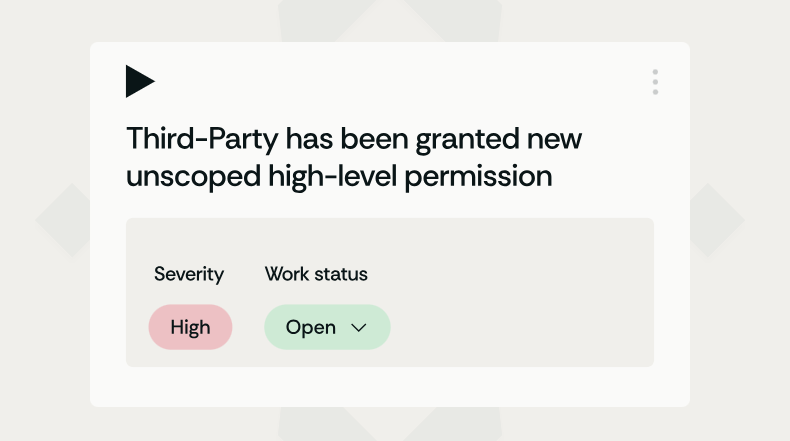
Vendor risk should reflect current conditions. Instead of relying on point-in-time assessments, teams need to automate continuous updates to the vendor’s risk profile as new evidence and changes in usage occur. This application shifts risk from a fixed output to an evolving dataset that aligns with how the vendor actually operates.
The value of this approach is not just freshness, but responsiveness. Changes in access, behavior, or external posture are surfaced as they occur, allowing teams to reassess exposure in real time and act before they become material risks.
5. Correlating External Risk Signals to Your Actual Vendor Exposure
When there’s a vendor breach, vulnerability, lawsuit, or outage disclosure, awareness alone isn’t enough. The real challenge is determining whether your organization is actually affected, and more importantly, how.
GRC automation can evaluate whether the vendor is in use and connect the event to its role within your environment. Then, the platform uses Blast Radius Monitoring to track exact vendor usage within your environment. By correlating these external signals with real usage, Lema shows not just that a vendor is affected, but what that means in practice, allowing teams to act immediately based on real exposure.
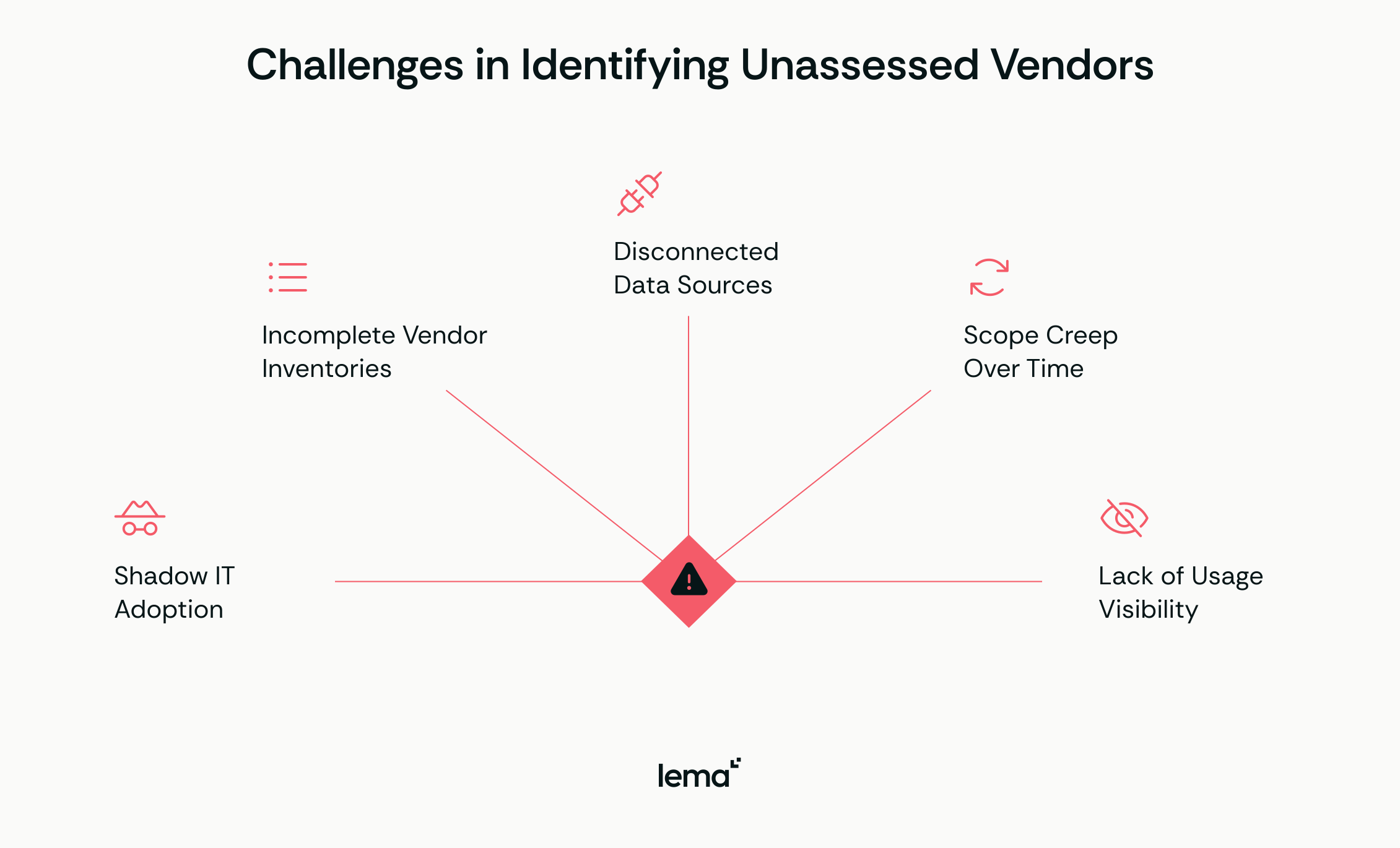
6. Discovering Vendors That Your Team Never Assessed
Vendors often exist in the environment without ever going through a formal review. Many enter through team-led SaaS adoption or informal integrations, and over time, their role expands without any reassessment of risk. This lack of visibility results in unquantified exposure that traditional inventory-based approaches fail to capture.
Applying GRC automation at this stage means analyzing actual system usage. By continuously processing authentication activity from identity providers and integration data across connected systems, platforms can surface third parties that are actively in use but missing from the official vendor list, exposing dependencies that would otherwise remain invisible.
7. Surfacing Vendor Risks That Actually Matter to the Business
Most prioritization approaches rank findings in isolation, without considering how the vendor is actually used. That makes it harder to see which issues matter. The same control gap means something very different in a vendor embedded in the product development lifecycle than in a low-impact tool used by one team, because the business exposure is different.
Applying automation at this stage means connecting risk signals to real usage. Instead of scoring issues on their own, the system evaluates each finding against the vendor’s footprint, such as what systems it connects to and what data it can access, turning risk into a set of decisions. The outcome is a prioritized view of vendor risk by impact, allowing teams to focus on exposures that could disrupt operations or pose meaningful risk.
8. Automating Targeted Follow-Ups
Assessment follow-ups often become repetitive because teams ask vendors to clarify entire control areas rather than the exact evidence gap. A vendor may submit a SOC 2 report, policy, or trust center material, but if a control is not clearly evidenced, the team still has to decide what to ask next manually.
Automating targeted follow-ups means the system identifies the specific missing proof and generates a focused request tied to that finding. Instead of asking a vendor to “provide more detail on access controls,” the request can point to the exact gap, such as missing evidence of MFA enforcement for privileged users or unclear logging retention for administrative activity. This use case is key to effective third-party risk monitoring, as it helps businesses continuously address gaps with precision.
9. Generating Audit-Ready Evidence
Lastly, you can use GRC automation to improve audit readiness during the assessment process. Automated tools can capture evidence and supporting context continuously as assessments are performed.
All relevant materials are structured and stored in accordance with audit requirements, ensuring documentation is complete, consistent, and readily accessible. This use case allows organizations to produce audit-ready outputs without manual reconstruction, clearly and efficiently demonstrating due diligence while reducing the operational burden typically associated with audit preparation.
How to Prioritize GRC Automation Use Cases in Your Organization
Prioritization should begin with the areas of highest exposure, not the areas with the slowest processes. The most valuable starting point is vendors that are deeply embedded in the business: those with access to sensitive data, integrations into core systems, or dependencies that would disrupt operations if they failed. Improving visibility and validation in these areas has a direct and measurable impact on risk.
From there, focus shifts to where decision-making breaks down. If assessments produce outputs but no clear actions, or if external signals require manual investigation to determine relevance, that is a sign that the current process is not translating information into insight. Apply automation where it removes that ambiguity and makes risk easier to understand and act on.
The final consideration is distinguishing between efficiency and impact. Automating low-risk or well-understood processes may improve speed, but it does not materially change the organization’s risk posture. The priority should be use cases that improve how you derive, validate, and connect risk to business exposure, because that is what ultimately determines whether automation changes outcomes or simply accelerates existing work.
From GRC Automation to Risk Engineering
GRC automation does not fail because teams lack tools. It fails because it has been applied to the wrong layer. Most platforms improve how teams complete assessments, but they do not change how teams understand risk. As a result, organizations move faster while still relying on incomplete inputs and assumptions about how vendors actually operate.
Lema turns GRC automation into an evidence-driven, exposure-based system for understanding and preventing material third-party risk. It combines Forensic AI Assessment, which includes forensic artifact analysis and OSINT Recon, with Blast Radius Monitoring to review documentation, validate external signals, and evaluate how the vendor is used. Then, it connects those inputs through Agentic Risk Engineering to determine where real risk exists.
Each risk is identified based on evidence, tied to how the vendor actually impacts your environment, and paired with specific remediation actions. As a result, businesses have a clear, continuously updated view of vendor risk and can take direct action to reduce real exposure.
Book a demo to uncover the risks that questionnaires and vendor attestations don’t surface.