
Third-Party Vendor Security Assessment: 10 Essential Components


Certifications, questionnaires, and vendor-submitted artifacts demonstrate due diligence, but they do not necessarily indicate whether a vendor poses a material risk within your environment.
The challenge becomes even greater at scale. 44% of organizations assess more than 100 third parties every year, yet only 4% have high confidence that vendor questionnaires accurately reflect real-world risk . Modern organizations do not need more assessments; they need assessments that combine business context, organizational exposure, independent validation, and ongoing risk visibility to understand how a vendor could affect the business over time.
What Is a Third-Party Vendor Security Assessment?
A third-party vendor security assessment is the process of evaluating whether an external vendor introduces an acceptable level of cybersecurity risk before (and throughout) the business relationship . It helps organizations understand how a vendor protects sensitive information, secures its services, manages operational risk, and aligns with the organization's security requirements.
Within a mature third-party risk management (TPRM) program, security assessments support informed business decisions rather than simply satisfying procurement or compliance requirements . The objective is to determine whether a vendor poses a material risk based on how your organization actually uses its products or services.
This process should begin before onboarding, but not end once the contract is signed. Vendors evolve, so effective assessments should be an ongoing process that adapts as the vendor relationship evolves.
Common Mistakes That Weaken Third-Party Vendor Security Assessments
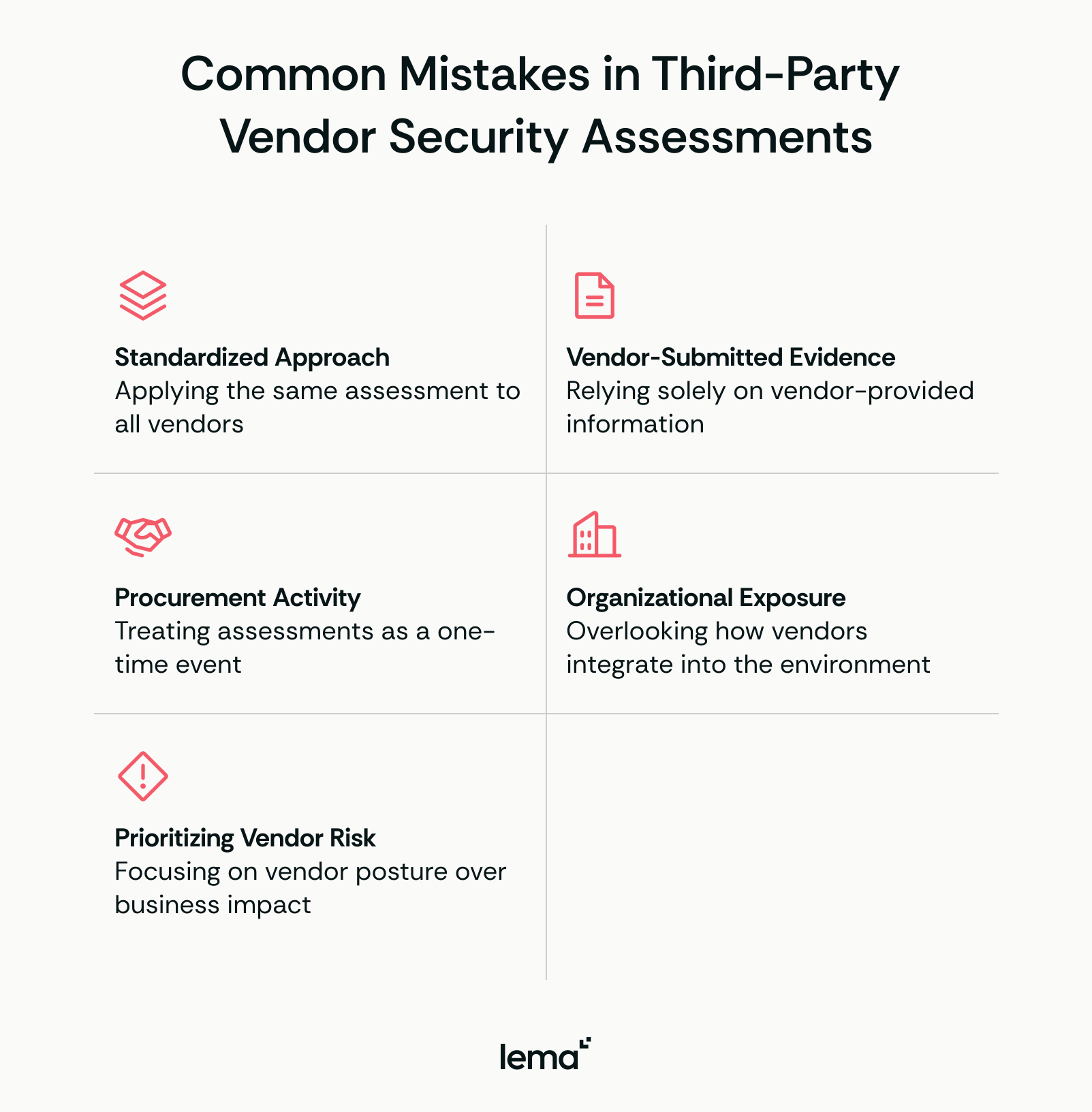
1. Applying the Same Assessment to Every Vendor
Most organizations standardize vendor assessments because they're managing hundreds or even thousands of vendors with limited security resources. It's operationally efficient, but it also means a low-risk marketing tool can receive the same review as a vendor with privileged access to production systems. Assessment depth should scale with business impact.
2. Treating Vendor-Submitted Evidence as Complete
Security teams depend on vendor-submitted artifacts because they're often the easiest and fastest source of information during procurement. The problem is that certifications, policies, and questionnaire responses provide only a snapshot of what the vendor reports about itself. Without validating those claims against independent evidence, important changes or undisclosed issues can go unnoticed.
3. Treating Assessments as a Procurement Activity
In many organizations, vendor assessments are owned by the procurement process. Once the contract is approved, the review is considered complete, and attention shifts to the next vendor. Vendor risk changes throughout the product lifecycle as new features, integrations, acquisitions, and deployment models are introduced, meaning the original assessment may no longer reflect the organization's actual exposure.
4. Ignoring Organizational Exposure
Assessments often focus on whether a vendor has appropriate security controls because that's what questionnaires and certifications are designed to measure. What they don't explain is how that vendor fits into your environment. Without understanding what systems the vendor can access, what data it handles, and how critical it is to operations, it's difficult to judge the real business impact of any finding.
5. Prioritizing Vendor Risk Instead of Business Impact
Many assessment programs evaluate vendors in isolation. As a result, findings are often prioritized according to the vendor's overall security posture. A vendor with average security but privileged access may represent a greater risk than a poorly rated vendor with almost no access to critical assets.
The 10 Essential Components of a Third-Party Vendor Security Assessment
1. Business Context and Vendor Criticality
Every effective assessment begins with understanding why the vendor exists within the business . Vendor criticality should never be determined by contract value or company size alone. Instead, organizations should evaluate factors such as operational dependencies, access to sensitive data, integration with critical systems, regulatory obligations, and potential business disruption if the vendor were unavailable.
This context determines how deeply the assessment should go. A vendor processing customer financial information warrants a significantly more comprehensive review than a low-risk collaboration tool used by a small internal team. By tailoring the depth of assessment to business criticality, security teams spend their limited review time where it yields the greatest reduction in organizational risk.
2. Organizational Exposure
Before evaluating those controls, organizations should first estimate the vendor's inherent risk - the level of supplier risk based on the services it provides, regardless of any mitigating controls.
They must then understand their own exposure if that vendor experiences a security incident. Exposure encompasses privileged accounts, connected applications, APIs, production environments, critical business processes, operational dependencies, and the vendor's overall blast radius . That is, the scope of systems, information, and business functions that could be affected if the vendor were compromised.
This exposure also changes over time. Assessments should reflect actual organizational usage. Enterprise Supply-Chain Security platforms such as Lema strengthen this process through Blast Radius Monitoring, helping organizations understand the potential business impact of a vendor by considering its access, integrations, business context, and operational dependency. This provides a more accurate picture of organizational exposure than relying solely on assumptions made during vendor intake.
3. Security Governance and Risk Management
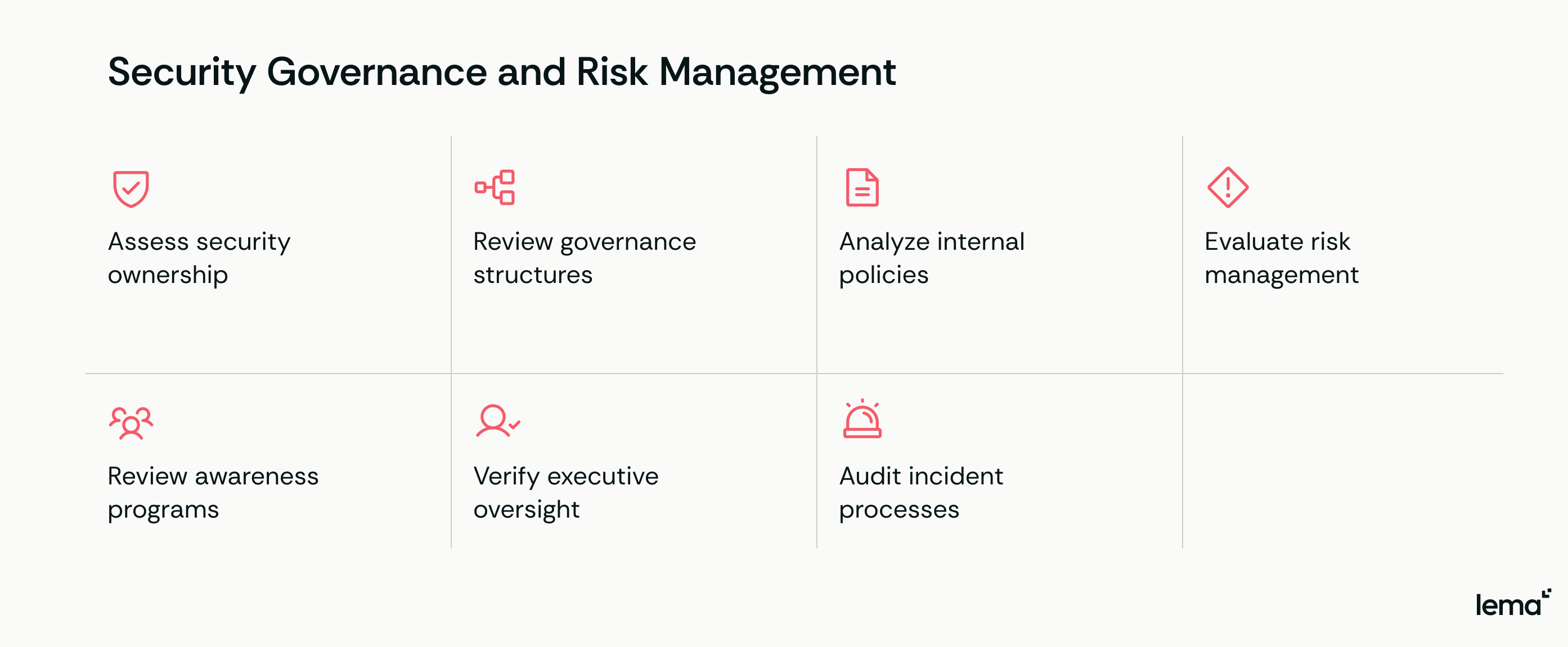
Evaluate how cybersecurity is managed across the organization. Review:
- Security ownership
- Governance structures
- Internal policies
- Risk management practices
- Employee awareness programs
- Executive oversight
- Incident reporting and remediation processes
Look for evidence that security is integrated into day-to-day business operations . Security maturity also provides useful context when interpreting other assessment findings. Vendors with established governance frameworks are generally better positioned to respond to new threats and adapt to changing risks.
4. Technical Security Controls
The next step is to evaluate whether the vendor's technical controls are appropriate for the services it provides and the access it receives. Mature assessment programs tailor their review to the vendor's role. A cloud infrastructure provider supporting production workloads requires far more scrutiny than a niche SaaS application with no access to sensitive data. The objective is to determine whether the controls are proportionate to the organization's exposure.
Areas typically reviewed include:
- Zero-trust identity and access management
- Multi-factor authentication (MFA)
- Encryption for data at rest and in transit
- Vulnerability and patch management
- Endpoint protection
- Logging and security monitoring
- Backup and disaster recovery capabilities
- Secure software development practices, where applicable
Security teams should review how controls are implemented, how consistently they are maintained, and whether supporting evidence demonstrates they operate effectively.
5. Independent Validation of Vendor Claims
Vendor-provided artifacts, including certifications, questionnaire responses, policies, penetration test summaries, and compliance reports, remain an important part of every assessment. The mistake is treating them as an unquestionable truth.
Independently validate vendor claims against publicly available intelligence by using a tool that can automatically review trust center materials, disclosed security incidents, published vulnerabilities, regulatory actions, adverse media, and other external sources that may contradict or add context to what the vendor has provided.
Lema automates much of this validation process through Forensic AI Assessment. It uses AI to analyze vendor-submitted materials and identify gaps, inconsistencies, and missing evidence. At the same time, OSINT Recon continuously collects publicly available intelligence to verify these materials against independent evidence instead of accepting them at face value.
When important gaps are identified, Lema generates targeted evidence requests so security teams can validate specific concerns, reduce unnecessary back-and-forth with vendors, and focus assessment efforts on the findings that could materially affect the business.
6. Fourth-Party and Supply Chain Dependencies
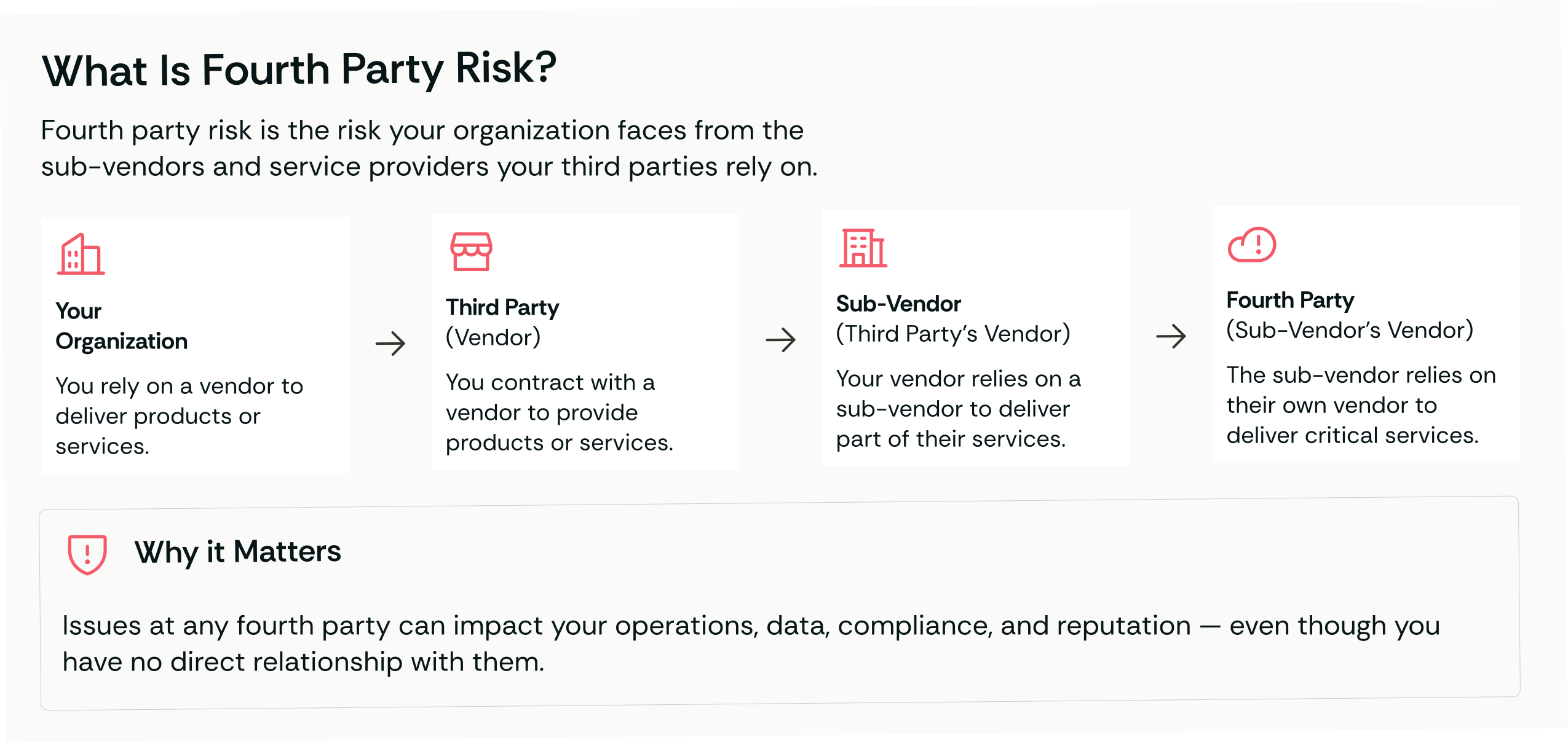
Every third party relies on its own ecosystem of cloud providers, subprocessors, infrastructure vendors, AI providers, and service partners. These fourth-party relationships can introduce significant operational and cybersecurity risk that remains invisible if organizations assess only the primary vendor.
Identify critical subcontractors, understand where services are hosted, review key technology dependencies, and evaluate concentration risk. If multiple business-critical vendors depend on the same cloud provider or identity platform, for example, a single outage or compromise could disrupt several essential business services simultaneously.
Organizations should also understand which third parties process sensitive data, provide privileged infrastructure, or support core business operations . While organizations may not be able to assess every downstream supplier directly, understanding these dependencies provides a much clearer picture of where hidden supply chain risk exists and where contingency planning may be required.
7. Data Protection and Privacy
Examine how data is collected, processed, stored, shared, retained, and ultimately deleted throughout the vendor relationship. The review should cover:
- Encryption practices
- Access controls
- Data classification
- Retention policies
- Deletion procedures
- Data residency
- Cross-border transfers
- Backup processes
- Compliance with applicable privacy regulations such as GDPR, ISO 27001, and HIPAA
Just as importantly, organizations should understand exactly what data the vendor requires to perform its services. Vendors frequently accumulate additional access or retain information beyond the original business need as relationships evolve. Limiting unnecessary access and validating ongoing data-handling practices help reduce both security exposure and regulatory risk over time.
As AI capabilities become embedded across SaaS platforms, assessments should also examine whether vendors have introduced new AI functionality since onboarding, whether those capabilities create shadow AI risks by enabling unsanctioned AI use across the organization, how customer data is used to train AI models, and what contractual safeguards exist to protect sensitive information.
8. Incident Response and Business Resilience
Review incident response capabilities alongside business continuity and disaster recovery planning. Evaluate documented response procedures, recovery objectives (RTOs and RPOs), crisis communication processes, testing frequency, and breach notification commitments.
In the event of a security incident, organizations need to understand exactly what to expect from the vendor, particularly how they will be notified and how business operations will continue. Even relatively short outages can interrupt customer services or create regulatory obligations.
9. Ongoing Risk Visibility
Risk is continuous and ever-changing, and so should your third-party risk monitoring . Organizations should continuously collect risk signals indicating meaningful changes in a vendor's security posture. Equally important is understanding how the vendor relationship changes internally, as each one increases the vendor's blast radius.
Lema addresses this through Continuous Risk Signal Collection and Blast Radius Monitoring . Continuous Risk Signal Collection gathers external intelligence, while Blast Radius Monitoring provides ongoing visibility into how third parties are actually used across the organization, helping teams identify scope drift, expanding access, and shadow IT before these changes materially increase organizational exposure.
10. Risk Prioritization and Remediation
Prioritize findings according to organizational exposure and potential business impact . The same vulnerability may require immediate remediation for one vendor while representing minimal concern for another, depending on the systems and business processes involved.
Each finding should include supporting evidence, a clear explanation of the business impact, practical remediation guidance, defined ownership, and realistic timelines. Reports should be understandable to technical teams, procurement, legal, executive leadership, and other stakeholders involved in vendor risk decisions.
Enterprise Supply-Chain Security platforms correlate vendor artifacts, publicly available intelligence, and organizational context to produce clear risk insights that explain what matters, why it matters, and the specific actions required to reduce exposure.
Better Assessments Lead to Better Decisions
Effective third-party vendor security assessments are no longer defined by how many documents you collect or questionnaires you complete. They are defined by whether they accurately reflect your organization's exposure, validate vendor claims with independent evidence, and identify the risks that could materially affect the business.
Lema helps organizations move beyond point-in-time assessments by independently verifying vendor evidence, correlating it with publicly available intelligence, and connecting every finding to organizational exposure. Instead of generating more paperwork, it helps security teams understand which risks matter, why they matter, and how to reduce them.